A family safari can be one of the rare trips that genuinely works for different ages at once. Kids get real-world animals, big skies, and stories to retell for years. Parents get a change of pace, excellent guiding, and the relief of having logistics handled well.
The part that often slows families down is health and comfort planning: malaria questions, age limits, drive lengths, and whether a lodge is truly set up for children. With the right destination and a lodge that welcomes younger guests, the safari becomes simpler than many families expect.
Start with malaria reality, not fear
Malaria risk varies widely across Africa, even within the same country. A “family safari in Africa” can mean a malaria-free Big 5 reserve in South Africa, or it can mean peak wildlife areas in East Africa where malaria precautions are part of the plan.
Medical guidance should always come from a qualified healthcare professional who knows your family’s ages, medical history, and travel route. What helps in the planning stage is sorting destinations into two practical buckets:
- Malaria-free or negligible risk: where many families prefer to start, especially with younger kids or first-time safari travelers.
- Malarial areas: still very doable with children, but you plan more carefully around medications, bite prevention, and sleeping setups.
If malaria-free is your priority, Southern Africa offers excellent options that do not require compromising on wildlife.
Malaria-free safari choices that still feel “classic Africa”
South Africa’s North West Province is a standout for families because it pairs Big 5 game viewing with malaria-free reserves and easy access via Johannesburg. Two names come up repeatedly for good reason: Pilanesberg National Park and Madikwe Game Reserve.
Pilanesberg National Park (malaria-free, Big 5, easy access)
Pilanesberg is a malaria-free Big 5 reserve that works well for shorter family breaks and first safaris. It’s a comfortable drive from Johannesburg, which keeps travel days reasonable when you have kids and luggage.
Pilanesberg also supports a range of lodging styles, from value-friendly to upscale, and many properties are used to hosting multi-generational groups.
Madikwe Game Reserve (malaria-free, private reserve feel)
Madikwe is also malaria-free and often chosen by families who want a more exclusive safari rhythm. It’s large, scenic, and known for strong guiding and wildlife viewing. Many lodges here are built with families in mind, including family suites and child-focused activities.
For families comparing the two, Pilanesberg can be ideal for a shorter “starter” safari paired with city touring, while Madikwe can feel like a deeper bush immersion.
What about Namibia, Botswana, and the Kruger area?
Namibia’s desert and many popular routes are generally considered very low risk for malaria, especially in the south. It’s a strong choice for families who want landscapes, space, and adventure beyond game drives. Botswana is famous for premium safaris, though parts of the country can carry malaria risk depending on season and location, so it is best planned with tailored health advice.
For those looking toward the iconic Kruger National Park, many families opt to stay just outside the gates to balance adventure with flexibility. When searching for the right base, exploring Hazyview accommodation options is a popular strategy; the town serves as a gateway to the park, offering family-friendly resorts and guest houses that provide a comfortable “home base” between excursions.
A quick comparison table for family planning
Below is a high-level way to compare popular regions. Exact lodge rules, drive times, and health recommendations vary by itinerary and season.
| Destination | Malaria status (family planning lens) | Best for | Typical child-friendly lodge features to look for | Travel style |
|---|---|---|---|---|
| Pilanesberg (South Africa) | Malaria-free | First safari, shorter trips, easy logistics | Pools, junior ranger style activities, family rooms | Road transfers from Johannesburg |
| Madikwe (South Africa) | Malaria-free | Private reserve feel, family suites, longer stays | Kids’ programs, babysitting options, flexible meal times | Road or flight connections |
| Namibia (selected routes) | Often very low risk; confirm by area | Desert scenery, road trip families, older kids | Family chalets, self-drive friendly layouts, relaxed pacing | Self-drive or guided |
| Botswana (selected areas) | Varies by region and season | Luxury camps, water-based safari | Family tents, private guides, shorter drives | Fly-in or mixed |
| Kenya, Tanzania, Uganda | Malaria risk present in many areas | Iconic migrations, gorillas, multi-park adventures | Family rooms, pools, flexible schedules | Flight and road combinations |
What “kid-friendly lodge” really means
A lodge can say it welcomes families and still be tough with children in practice. The most reliable signals are structural, not marketing.
Family-ready lodges usually do four things well: they manage safety, they make meals easy, they offer age-appropriate activities, and they respect the family’s schedule. In malaria-free South Africa, properties often add the bonus of relaxed evenings without the added stress of malaria medication decisions for that segment of the trip.
After you’ve narrowed the destination, use a lodge short list that’s based on how your family travels, not how adults travel without kids.
Here are practical features that tend to matter most once you arrive:
- Room design: family suites, interleading rooms, or enough space for an extra bed or crib.
- Daily rhythm: flexibility around early dinners, nap windows, or shorter game drives.
- Play and learning: junior ranger programs, craft activities, nature talks, track casting, star gazing.
- Safety details: fenced areas where appropriate, clear rules around water, staff trained to guide kids kindly but firmly.
In Pilanesberg, lodges like Kwa Maritane Bush Lodge are well known for family-friendly setups and junior ranger style programming. In Madikwe, family favorites often include Madikwe Safari Lodge and Lelapa Lodge, both of which are frequently chosen for family suites and kid-focused options.
Matching lodge choice to your child’s age
Age policies on safari are real, and they exist for safety and experience quality. Some lodges accept toddlers but restrict them from certain activities. Others are designed around families and can accommodate a wider range, often with tailored drive times and child-minding options.
Many family safari itineraries work best from about age 4 and up, when kids can sit comfortably on drives and follow guide instructions. That said, infants and toddlers can still travel well with the right lodge and a plan that avoids long, rigid schedules.
A good planning conversation usually starts with three questions: How long can your child sit still? What time do they naturally wake up? Are they excited by animals, or do they need a mix of pool time and short activities?
The easiest win: shorter game drives, better sightings
Parents sometimes assume a “proper” safari means long game drives. With children, shorter can be better. A focused two to three hour drive with a great guide often beats an all-morning outing where everyone is hungry and tired.
A family-sensitive guide will also adapt the drive to what kids notice first: dung, tracks, birds, insects, and animal behavior. Those details keep children engaged between big sightings.
If you want a simple way to brief your guide on day one, share what motivates your kids: big cats, elephants, baby animals, birds, photography, or “anything that moves.”
Malaria-free does not mean mosquito-free
Even in malaria-free reserves, mosquitoes and other biting insects can still be around, especially in warmer months or after rain. Bite prevention is still worth doing for comfort, sleep, and general well-being.
A family packing plan does not need to be complicated, but it should be consistent. Many travelers use a mix of long sleeves at dawn and dusk, effective repellent, and smart sleep habits.
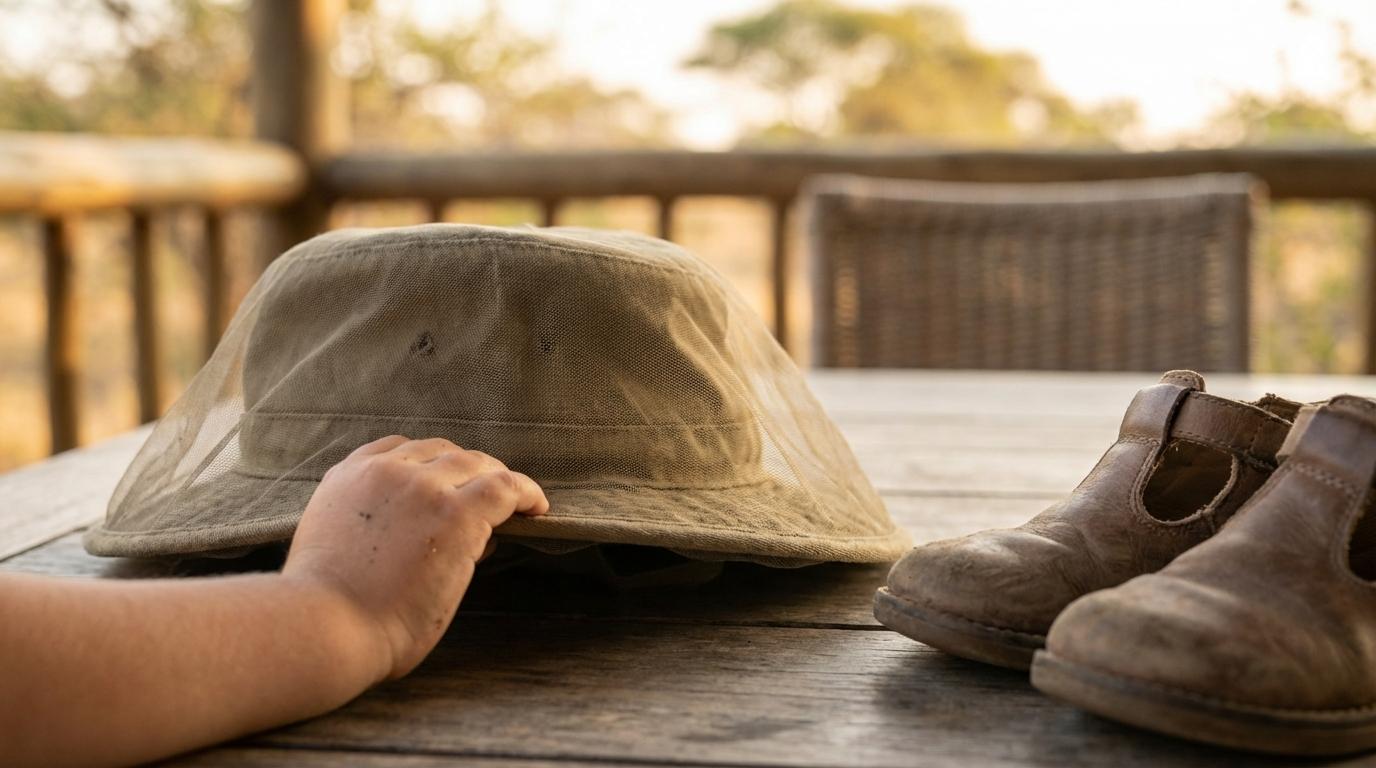
- Light layers
- Closed-toe shoes
- Wide-brim hat
- Child-safe insect repellent
- A simple first-aid kit
If your itinerary includes malarial regions, plan bite prevention more carefully and speak to a medical professional about appropriate antimalarial medication for each family member. Many lodges also provide mosquito nets and screened doors or windows, which can make a big difference to sleep quality.
Planning timing: dry season vs green season for families
In South Africa’s malaria-free safari areas, travel is generally possible year-round, so you can choose dates around school calendars. Wildlife viewing often peaks in the drier winter months, roughly May through September, when vegetation is thinner and animals gather near water.
Green season can still be wonderful for families. Landscapes are lush, some rates may be more attractive, and it can feel quieter. You trade a bit of visibility for a softer, greener backdrop and often excellent birdlife.
A helpful way to decide is to pick your family’s top priority and let that guide the season. If you want classic, high-density sightings, aim for the dry season. If you want warmer weather and pool time with a safari mix, consider the greener months.
What to ask before you book a family safari
Families get the smoothest trips when they ask specific questions early. It prevents surprises around meal times, room layouts, and what children can and cannot do.
Here are questions that usually save time and stress:
- Can children join both game drives?
- Are private vehicles available, and at what cost?
- Do you offer kids’ menus and early dining?
- Is there a pool, and is it fenced or supervised?
- What is the lodge’s child-minding policy?
When a safari is tailor-made, you can also plan clever combinations: a few safari nights first, then a city stay with museums and parks, or a beach add-on for downtime.
Sample family safari structures that work well
Some trips are better when they are built around energy levels rather than a long checklist of places. A few formats consistently work for families:
1) First safari, lower travel time (4 to 6 nights total)
Johannesburg arrival, then Pilanesberg for a few nights in a kid-friendly lodge, then one or two nights back in the city for a lighter finish.
2) Bush-focused with family suites (4 to 7 nights in one reserve)
Madikwe with a family-oriented lodge, fewer transfers, more time for kids to settle into the rhythm of game drives and downtime.
3) Multi-country classic (7 to 12 nights)
A malaria-free South Africa safari first, then Victoria Falls or a beach segment. This keeps the first safari leg simple, then adds a “wow” landmark or relaxation.
At Africa Moja Tours & Safaris, many family requests center on malaria-free reserves like Pilanesberg and Madikwe, paired with lodges that can provide family rooms, flexible meal times, and guides who are comfortable hosting children. End-to-end planning can also include transfers, flight timing that fits nap schedules, and 24/7 on-trip support so parents are not solving problems alone while traveling.
How “luxury” can actually help families
Luxury on safari is not only about premium rooms. For families, it often means fewer friction points: closer airstrips, faster check-ins, private vehicles when needed, and staff who can adapt quickly.
It can also mean practical comforts that keep everyone happier:
- Laundry done daily when kids spill things
- A kitchenette or minibar for snacks
- Shaded outdoor areas for mid-day rest
- A pool that becomes the reward after a morning drive
When you build the trip around your family’s rhythm, kids tend to love safari for the same reason adults do: every day feels a little different, and the best moments are never fully scheduled.