The Okavango Delta does not follow the safari pattern many travelers expect. Botswana’s famous wetland reaches its fullest expression during the country’s dry winter months, when floodwater from Angola spreads across the Kalahari sands and turns the region into a maze of channels, islands, lagoons, and floodplains.
That single fact shapes almost every travel decision, from when to go to what kind of camp to book. If you want classic mokoro trips through clear channels, one season stands out. If you care more about green scenery, nesting birds, dramatic skies, and lower season rates, a different window may suit you better.
Why the Okavango Delta flood cycle changes the best travel months
The Okavango Delta is often called a miracle in the desert because it is an inland delta, not a river that reaches the sea. Water flows in from the Angolan highlands and arrives months after the regional rains, which means peak flood levels usually happen around the middle of the year, not during Botswana’s summer rain season.
That is why June through October is so popular. While much of southern Africa is in its dry season, the Delta’s channels are often full, the islands are dry enough for game viewing, and wildlife gathers near permanent water. It creates the classic Okavango picture many people have in mind.
Then the green season shifts the mood entirely.
From November through April, the landscape becomes lush, birdlife increases dramatically, young animals appear, and afternoon storms can bring rich color to the sky. The safari still delivers, but it feels softer, greener, and more photographic in a very different way.
Best time to visit the Okavango Delta for wildlife, water levels, and photography
If your first priority is classic Delta water activity, the dry season is usually the strongest choice. From June to August, channels tend to be at good levels for mokoro safaris and boat outings, temperatures are cooler, and the bush is thinner than it will be later in the summer. Wildlife viewing is strong, with animals moving between islands and water sources.
From September to October, game viewing often remains excellent and can become even more intense in some areas because the broader landscape is dry and animals are pulled toward water. These months are warmer, sometimes very hot by October, but they are often rewarding for predator sightings and dramatic big game scenes.
The green season, from November to April, appeals to travelers who want more than a checklist of animal sightings. Birding is outstanding, the grasslands glow, and photographers often enjoy the softer atmosphere, cloud build-up, reflections, and fresh tones. This is also when the Delta can feel especially alive with insects, frogs, migratory birds, and newborn animals.
May and early June can be a smart middle ground, depending on annual flood timing and camp access.
After looking at the seasons, many travelers find their answer fits one of these priorities:
- For classic mokoro and water-based safaris: June to August
- For strong general wildlife viewing: July to October
- For birding and green landscapes: November to April
- For shoulder-season value and fewer visitors: May or November, depending on rainfall and camp schedules
Okavango Delta seasons month by month in practical terms
June, July, and August are often the sweet spot for travelers who want cooler weather and a good mix of water and wildlife. Early mornings can be cold in open vehicles, so warm layers matter, but midday conditions are usually pleasant. This is a favorite window for first-time Delta visitors.
September and October bring heat, dust, and some of the strongest concentration of wildlife around water. If you are comfortable with hotter afternoons, these months can be excellent for game viewing. November is the transition month, with storms starting to build and the scenery beginning to change.
December through March is greener, moodier, and quieter in feel. Rain may affect road conditions in some areas, but many camps still deliver beautiful water activities, birding, and rich photographic scenes. April can be especially attractive, with fresh vegetation, fewer visitors than peak winter, and a calmer pace before the classic high-water months begin again.
Where to stay in the Okavango Delta: water camps, mixed camps, and lodge styles
Picking the right area and camp style matters almost as much as choosing the right month. The Delta is not one single block of habitat. Some camps sit deep in permanent water areas, where mokoro trips and boat safaris shape the stay. Others are in mixed terrain with both land and water access, giving you a stronger balance of game drives and wetland activity.
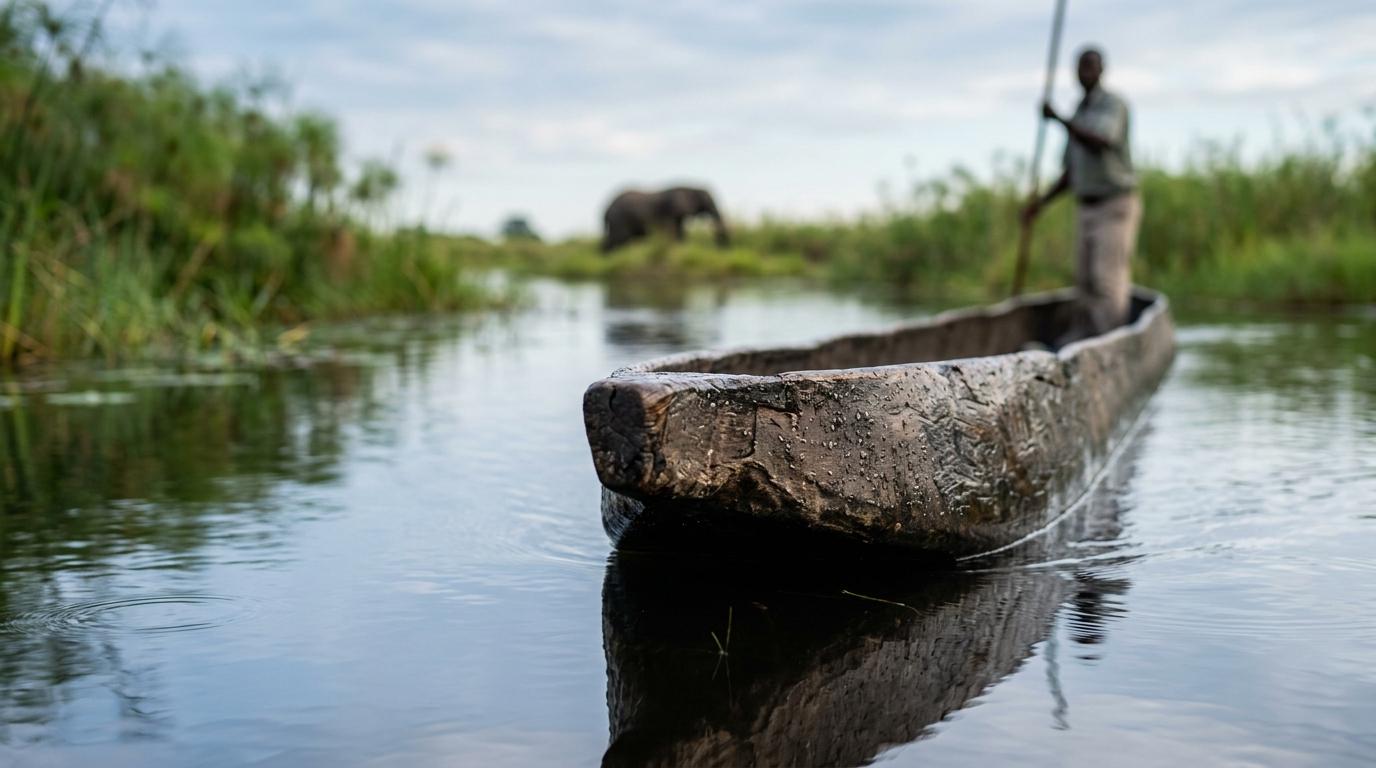
A deep-water camp is often the right fit for travelers who want the iconic stillness of the Okavango, gliding through reeds with a local poler, watching kingfishers, frogs, elephants on islands, and the wide sky reflecting on the channels. These camps feel intimate and immersive.
Mixed-activity camps are ideal for people who want more variety. You may head out by boat in the morning, do a game drive later, and add a guided walk or scenic flight. For many first-time visitors, that balance works very well because it shows several faces of the Delta in one stay.
Accommodation in sample itineraries often leans toward comfortable mid-range and luxury tented camps or lodges, with private en-suite tents, dining areas, bush views, and well-planned logistics. Some properties also suit families, with larger tent layouts and child-friendly guiding depending on the camp.
Here is a simple look at the types of stays often used on Okavango itineraries:
| Property | Area / Style | Best For | Notes |
|---|---|---|---|
| Moremi Crossing | Boro River area, luxury tented eco-camp | Couples, families, first-time Delta travelers | Water-based setting, en-suite tents, guided safaris, strong Delta atmosphere |
| Pom Pom Camp | Boro River area, luxury tented camp | Couples, wildlife-focused travelers, photographers | Good access to floodplain wildlife, stylish tented comfort, classic safari setting |
| Okavango Safari Lodge | Riverside lodge style stay | Couples, families, travelers combining activities | Comfortable lodge format with boat outings and game viewing options |
The best camp is not always the most expensive camp. A camp that matches your month, interests, mobility needs, and preferred safari pace will usually give you a better trip than booking by price alone.
Best Okavango Delta activities by season and camp location
The Okavango is one of the few safari regions where the activity mix can feel as memorable as the wildlife itself. A lion sighting is exciting anywhere in Africa. Floating silently past papyrus banks in a mokoro, with fish eagles calling overhead, feels very specific to this place.
June through October is usually strongest for traditional Delta water experiences, especially mokoro and boating in areas with good channels. Game drives are also very rewarding during this period, particularly in camps that combine wetland access with nearby dry land habitats. Walking safaris add another layer, with a close focus on tracks, smaller species, and the shape of the land.
In the green season, birding becomes a major draw. Migratory species arrive, breeding plumage stands out, and the scenery has a softer, fuller look that many photographers love. Scenic helicopter or fixed-wing flights can be beautiful year-round, but they are especially striking when water patterns are clearly visible from the air.
Many itineraries mix several of the Delta’s hallmark activities:
- mokoro safaris
- boat safaris
- open 4×4 game drives
- guided bush walks
- scenic flights
Cultural visits can also be included in some programs, usually as optional add-ons arranged with care and respect for local communities.
Okavango Delta logistics: flights, park fees, and what to pack
Most international travelers reach the Delta via Maun. A common routing is to fly into Johannesburg or Cape Town, connect to Maun, then continue by light aircraft charter or road transfer depending on the camp location and package style. Fly-in safaris save time and open access to more remote camps.
This is one of the easiest places to turn a short safari into a broader southern Africa trip.
Many Botswana safari packages include park entry fees and conservation levies, which makes budgeting easier. What is usually separate includes international flights, visas where required, travel insurance, gratuities, and optional extras like helicopter flights or premium drinks.
Health planning is straightforward, but it should be handled early. Speak with a travel clinic or doctor about malaria precautions and any recommended vaccinations. Pack neutral clothing, sun protection, insect repellent, and layers for cool mornings in winter. Soft-sided luggage is often required on light aircraft due to weight and space limits.
A few basics help avoid last-minute surprises:
- Flights: International airfare and regional connections are usually booked separately unless clearly included
- Transfers: Camp access may involve light aircraft, 4×4 vehicles, boats, or a mix of all three
- Included costs: Many safari packages cover park fees and conservation charges
- Usually extra: Visas, insurance, gratuities, and optional scenic flights
How many nights to spend in the Okavango Delta for the best experience
A two-night stay can work if time is tight, especially on a fly-in safari, but it is short. You arrive, settle in, do a few activities, and leave just as the rhythm begins to sink in.
Three to four nights is a much better fit for most travelers. That gives enough time for different safari activities, weather changes, and a slower pace between outings. If Botswana is part of a longer route, the Delta pairs very well with Chobe, Victoria Falls, or even a wider Southern Africa safari.
For travelers choosing between months, the simplest answer is this: go from June to October for high water, classic Delta safaris, and strong wildlife viewing; go from November to April for green scenery, birdlife, and a quieter, more atmospheric style of trip. Then choose a camp that matches the activities you care about most.