
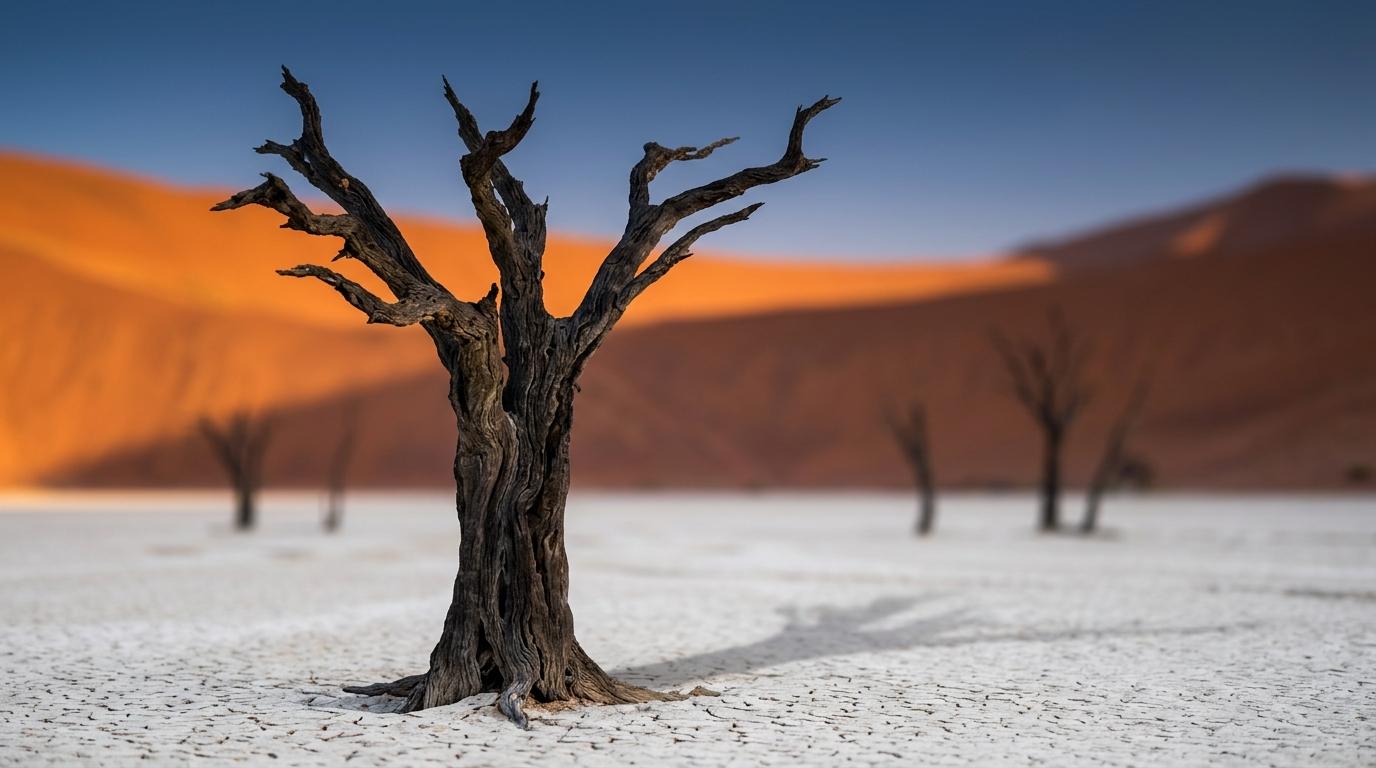
A Namibia desert safari feels different from the first hour. The light is sharper, the air is drier, and the landscape seems to stretch forever. Then the colors start to shift. Red dunes catch the morning sun, white clay pans glow under a blue sky, and the silence becomes part of the experience.
For many travelers, the heart of that trip is the Sossusvlei area in Namib-Naukluft National Park. This is where you find the famous dunes, the stark beauty of Deadvlei, and some of the most recognizable desert scenery in Africa.
Why a Namibia Desert Safari Focuses on Sossusvlei and Deadvlei
Sossusvlei is the big visual anchor of the region, a vast salt and clay pan surrounded by towering dunes. Close by, Deadvlei is even more dramatic. Its white floor, dark camel-thorn trees, and rust-red dunes create one of the most photographed scenes in Namibia. The trees are thought to be around 900 years old, preserved by the dry climate rather than fully decayed.
The area is not only about standing in front of a famous viewpoint. It is about moving through it. You drive the dune corridor at dawn, stop at places like Dune 45, walk into Deadvlei as the sun climbs, and decide whether you want a moderate sand walk or a tougher ascent up Big Daddy. Sesriem Canyon adds a very different texture to the day, with shaded rock walls and the story behind its name, linked to the six leather belts once tied together to draw water.
Some landscapes impress you at a glance. This one keeps changing every hour.
Best 3-Day Namibia Desert Safari Itinerary
A short trip can work very well here, as long as it is timed around sunrise. Three days is a smart option for travelers who want enough time to enjoy the dunes without rushing in and out on the same day.
Most itineraries start from Windhoek, though Swakopmund can also work with a different routing. The drive from Windhoek to Sesriem is usually about 4 to 5 hours, depending on stops and road conditions. Once you reach the desert, the rhythm changes. Early starts matter, midday slows down, and sunset becomes part of the plan.
| Day | Route and Highlights | Suggested Overnight | Notes |
|---|---|---|---|
| Day 1 | Windhoek to Sesriem, scenic drive through central Namibia, possible Tropic of Capricorn stop, sunset at Elim Dune | Lodge or campsite near Sesriem | Good day for arrival, rest, and first desert views |
| Day 2 | Pre-dawn departure, Dune 45 at sunrise, continue to Sossusvlei, walk into Deadvlei, optional Big Daddy climb, return for lunch, Sesriem Canyon later | Lodge or campsite near Sesriem | Main highlight day, start very early |
| Day 3 | Relaxed sunrise or short nature walk, optional Hiddenvlei or scenic reserve activity, return to Windhoek or continue to Swakopmund | Departure day or onward overnight | Best kept flexible based on pace and interests |
On Day 1, the goal is simple: get into position for the early start the next morning. A sunset visit to Elim Dune works well because it offers strong color without demanding too much energy after a road transfer. This is also the right time to settle in, check gear, fill water bottles, and get to bed early.
Day 2 is the signature desert day. Many travelers stop first at Dune 45 because it is accessible, photogenic, and manageable for most fitness levels. After that, the route continues deeper into the park toward the Sossusvlei area. The final stretch is deep sand, so most visitors either use a proper 4×4 or take a shuttle from the parking area. From there, it is a walk into Deadvlei. If energy levels are high, Big Daddy is the big challenge, with sweeping views over the pans and dune sea. If not, a slower pace through Deadvlei can be just as rewarding.
Day 3 can stay light. Some people want one more quiet sunrise. Others prefer a short walk, a late breakfast, and the drive onward. If your time allows, this is also the point where a private itinerary can branch toward Swakopmund, the coast, or a longer Namibia circuit.
Sossusvlei and Deadvlei Timing for Sunrise and Photography
The biggest mistake in a desert itinerary is treating Sossusvlei like an all-day casual stop. It works best when the schedule is built around first light. Morning brings the color contrast people come for, and it also helps you avoid the harsh midday heat.
Deadvlei is especially striking early in the day, when the clay pan is still bright and cool-toned, the shadows are long, and the dune edges are sharply defined. By late morning, the light is flatter and the heat can become intense. In hotter months, walking or climbing after mid-morning is far less comfortable.
A good plan keeps the hard walking early, the slow scenic time in the middle of the day, and the second round of views near sunset.
- Departure: leave camp or lodge around 5:00 to 6:00 a.m., depending on season and gate access
- Dune 45: ideal for first light and a shorter climb
- Deadvlei: best visited in the early morning for both temperature and photography
- Big Daddy: a tougher climb, best only if you start early and carry enough water
- Midday rest
- Sesriem Canyon: a strong later option when dune walking is no longer appealing
Travelers staying inside the gate, or at properties with early access advantages, often get a better start on the day. That matters more than many people expect.
Namibia Desert Safari Transport and Accommodation Near Sesriem
The main road access to Sesriem is straightforward by Namibian standards, but the final section into Sossusvlei is where logistics become important. The last 5 to 6 kilometers are deep sand. A standard vehicle is not enough there. That is why guided safaris, lodge transfers, and capable self-drive 4×4 vehicles are the usual choices.
For many international visitors, this is where a guided trip makes life easier. A professionally run safari handles the timing, park entry flow, sand driving, and route planning, which lets you focus on the experience rather than the mechanics of getting through the dunes at dawn.
Accommodation near Sesriem suits a wide range of travel styles. Campsites are popular for value-focused trips and for travelers who enjoy the desert atmosphere after dark. Mid-range lodges offer comfort, meals, and practical access to the park. Luxury camps and lodges add more privacy, refined service, and often excellent settings for stargazing or sundowners.
If photography and sunrise are priorities, staying close to the gate is usually worth it.
Desert Wildlife and the Namib Landscape Beyond the Famous Dunes
The dunes get most of the attention, but the Namib has more life than many first-time visitors expect. Along the roads and around dry riverbeds, you may see gemsbok, springbok, ostrich, jackal, and smaller desert-adapted creatures that leave delicate tracks in the sand long before you spot them.
There is also a quiet botanical story here. Camel-thorn trees, sparse grasses, and hardy desert plants show how survival works in one of the driest places on Earth. A good guide adds context to the scenery, pointing out animal behavior, tracks, geology, and the way changing light reshapes the land.
And then there is the silence.
That silence is one of the reasons the area stays with people long after the trip ends. It makes the visual contrast feel even sharper.
Best Seasons for a Namibia Desert Safari Itinerary
Namibia can be visited year-round, but the best season depends on how you want the trip to feel. Many travelers prefer the cooler dry months from May to September. Daytime temperatures are more comfortable for walking, skies are usually clear, and sunrise outings are pleasant if you dress in layers.
The hotter months from October into April can still be rewarding, though they demand more care with timing and hydration. Summer heat builds quickly, and daytime temperatures can become severe. On the plus side, occasional cloud build-up and rare rain can create dramatic skies and unusual desert moods. In exceptional wet periods, water may even reach the pans, changing the scene completely.
- May to September: cooler mornings, clearer skies, easier hiking, cold nights
- October to April: hotter days, stronger heat management needed, chance of storm drama and seasonal variation
Winter visitors are often surprised by how cold desert mornings can feel before sunrise.
What to Pack for Sossusvlei, Deadvlei, and Dune Walks
Packing for this safari is less about volume and more about smart basics. Temperatures can swing sharply between dawn and midday, and there is very little shade once you are out on the pans or dunes.
Bring clothing that works in layers, shoes that handle sand well, and enough water for every active morning. A scarf or buff can help if the wind picks up. Photographers should also think about dust protection for cameras and lenses.
- Wide-brim hat
- Sunscreen
- Sunglasses
- Closed walking shoes
- Refillable water bottle
- Light jacket for early starts
- Camera with extra battery
- Small daypack
A tripod is useful for low light and night skies, but only if you are happy carrying it through sand.
Guided Namibia Desert Safari Options and Custom Itinerary Ideas
A classic 3-day route works well, though many travelers choose to build it into a longer Namibia trip. The most common extensions include Swakopmund, Walvis Bay, Sandwich Harbour, or a broader circuit that adds Etosha and the coast. Honeymooners may want a luxury desert lodge and more private pacing. Families often prefer shorter walks, easier dune stops, and fewer lodge changes.
This is where a tailor-made safari can make a big difference. Africa Moja Tours & Safaris arranges guided Namibia trips with local expertise, small-group or private options, end-to-end logistics, and support across Southern Africa. For travelers who want the Sossusvlei experience without managing vehicle logistics, park timing, and accommodation choices on their own, that kind of planning can be very helpful.
A well-built itinerary does not try to cram every dune, pan, and activity into one morning. It gives you time to stand in Deadvlei before the heat arrives, time to choose the right dune for your pace, and time to let the Namib do what it does best: slow everything down while the landscape becomes bigger around you.