
Planning a first trip to South Africa often comes down to one big question: should you focus on Cape Town, or choose safari country?
With 10 days, you do not have to pick just one. A well-paced route gives you time for Cape Town’s mountain, coastline, food, and history, then pairs it with a classic Big Five safari in the Kruger region. You get city energy, wild landscapes, ocean views, and early-morning game drives in one trip.
That balance is exactly why this itinerary works so well for first-time visitors.
Why a 10-Day Cape Town and Safari Itinerary Works for First-Time Visitors
Ten days is long enough to feel like you have truly seen South Africa, but short enough to fit into a standard vacation. It also gives you enough breathing room to avoid the rushed feeling that comes with trying to squeeze too many stops into one week.
A smart route usually starts in Johannesburg, which is South Africa’s main international gateway for many long-haul arrivals. From there, travelers head to the Kruger area for safari, then fly onward to Cape Town. That sequence makes sense. You begin with a cultural and historical layer, shift into wildlife viewing, and finish with a more relaxed coastal stay.
The result is a trip with real variety.
Cape Town offers landmark sights like Table Mountain, Cape Point, Chapman’s Peak Drive, and Boulders Beach. Safari days bring a completely different rhythm: early starts, open safari vehicles, and long stretches spent watching animal behavior rather than racing from one attraction to another. Put together, the trip feels full without feeling repetitive.
Sample 10-Day Cape Town and Safari Itinerary at a Glance
A first-time route should be easy to follow, with sensible travel times and a clear split between safari days and Cape Town sightseeing.
| Day | Area | Main Plan | Overnight |
|---|---|---|---|
| 1 | Johannesburg | Arrive, airport transfer, rest after long flight | Johannesburg |
| 2 | Johannesburg | Soweto and Apartheid Museum or city history touring | Johannesburg |
| 3 | Kruger region | Road transfer to safari area, afternoon game drive | Safari lodge |
| 4 | Kruger region | Full-day guided safari in open vehicle | Safari lodge |
| 5 | Kruger to Cape Town | Early game drive, then flight to Cape Town | Cape Town |
| 6 | Cape Town | Table Mountain and harbor or Waterfront time | Cape Town |
| 7 | Cape Peninsula | Chapman’s Peak, Cape Point, Cape of Good Hope, penguins | Cape Town |
| 8 | Cape Town area | Winelands tour or Robben Island | Cape Town |
| 9 | Cape Town | Leisure day, Waterfront, optional aquarium or local sightseeing | Cape Town |
| 10 | Cape Town | Breakfast, airport transfer, departure | Departure |
Weather can affect a few activities, especially Table Mountain cableway operations and Robben Island sailings, so flexibility matters.
Day-by-Day Cape Town and Safari Itinerary Details
Days 1 and 2: Johannesburg Arrival and South Africa History
Most international flights arrive in Johannesburg, so it makes sense to start here rather than adding another connection on the same day. Day 1 is best kept simple. After a long flight, a private transfer and a comfortable hotel can make a major difference. If energy allows, you can have a quiet dinner and reset your body clock.
Day 2 adds context to the trip. A guided visit to Soweto and the Apartheid Museum gives first-time visitors a stronger sense of South Africa’s recent history, social change, and national identity. This part of the itinerary is often one of the most meaningful, especially when paired with sites linked to Nelson Mandela and the broader anti-apartheid movement.
Days 3 to 5: Kruger Safari Game Drives and Big Five Sightings
On Day 3, the trip shifts from city streets to bush country. A road transfer to the Kruger region usually takes several hours, but it is manageable when timed well. Many itineraries aim to arrive in time for an afternoon game drive, which is a good introduction to safari life.
Your first drive is rarely just about ticking animals off a list. It is about getting used to the pace of the bush, reading tracks, watching giraffes move through scrub, and listening to the guide explain why one area attracts elephants while another is better for predators. That slower rhythm becomes part of the experience very quickly.
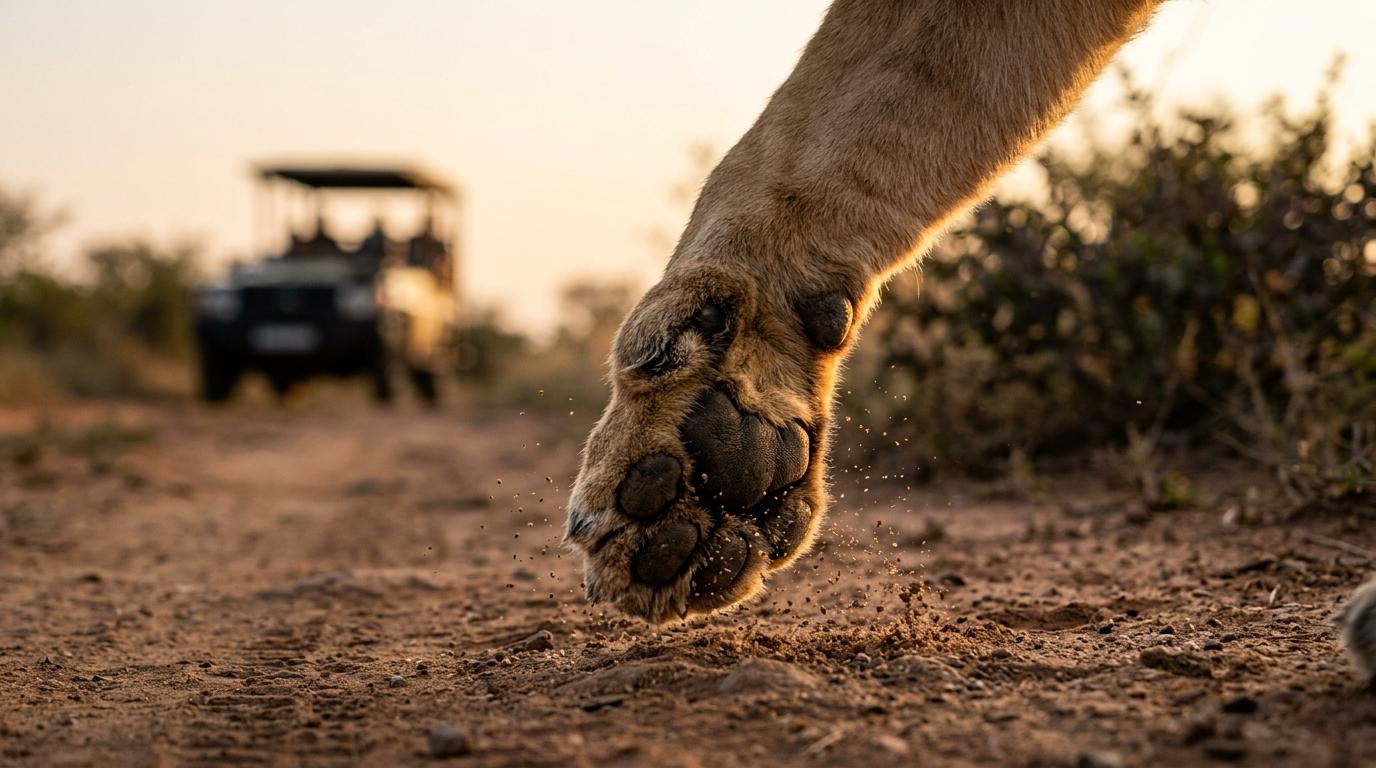
Day 4 is often the biggest safari day, with a full-day guided drive. Early morning and late afternoon usually produce the best sightings because animals are more active when temperatures are lower. Between the Big Five, birdlife, antelope species, zebras, hippos, and smaller moments like vultures gathering in a tree or a herd crossing the road, the day feels packed even when nothing is rushed.
Day 5 usually begins before sunrise with one last game drive. That dawn start is worth it. The air is cooler, the light is beautiful for photos, and predators are often still moving. Later in the day, a domestic flight brings you to Cape Town, where the setting changes once again from bushveld to mountain and ocean.
Days 6 to 9: Cape Town Highlights, Coastal Scenery, and Flexibility
Cape Town can be many things at once: scenic, urban, historic, outdoorsy, stylish, and deeply layered. Day 6 often centers on Table Mountain, weather permitting. Going up by cable car gives you wide views over the city, Table Bay, Robben Island, and the surrounding peaks. Pairing that with time at the V&A Waterfront or a short harbor cruise keeps the day active without making it exhausting.
Day 7 is one of the most photogenic days on the trip. The Cape Peninsula route links dramatic roads, ocean viewpoints, and wildlife in a single outing. Chapman’s Peak Drive is a highlight on its own, then Cape Point and the Cape of Good Hope bring rugged cliffs and open sea views. Boulders Beach adds a lighter, family-friendly stop where African penguins gather close to the boardwalks.
Day 8 works well as a choice day. Some travelers prefer the Cape Winelands, with vineyard scenery, cellar visits, and a slower countryside pace in places like Stellenbosch or Franschhoek. Others choose Robben Island for a more historical focus. Both options fit a first trip, and the better choice depends on what kind of balance you want on your vacation.
Day 9 should stay light. A free day in Cape Town gives space for shopping, a long lunch, extra sightseeing, or simply walking around the Waterfront and soaking up the city. After several guided days, that open time often feels just as valuable as the scheduled touring.
Day 10: Cape Town Departure and Airport Transfer
The final morning is usually straightforward: breakfast, check-out, and transfer to Cape Town International Airport.
Cape Town and Safari Logistics for First-Time Visitors
The success of this type of itinerary depends on smart logistics. South Africa is a large country, and trying to cover the Kruger region and Cape Town by road alone would eat up too much vacation time. That is why many 10-day trips combine a road transfer into safari country with a domestic flight to Cape Town.
Accommodation also shapes the feel of the trip. A city hotel in Johannesburg, a safari lodge near or in the Kruger area, and a centrally placed hotel in Cape Town create a very comfortable rhythm. You are not unpacking every night, and each base supports the days around it.
The pace is active, but it should not feel punishing if the trip is planned properly.
- Transport style: Arrival transfers, guided road touring, open safari vehicles, and a domestic flight between regions
- Accommodation mix: City hotels for convenience and safari lodges for bush access
- Best for: First-time visitors who want wildlife, scenery, and history in one trip
- Easy to customize: Hotel category, private guiding, Winelands vs. Robben Island, or extra nights in Cape Town
What to Pack for a Cape Town and Safari Itinerary
Packing for this route is easier than many people expect. You do not need specialist safari gear, but you do need to think about changing conditions. Cape Town can be sunny, windy, or cool in the same day. Safari mornings can feel cold, even when afternoons are warm.
Comfort matters more than fashion, especially on game drives and longer touring days.
- Light layers
- Warm jacket for early drives
- Neutral, comfortable clothes
- Good walking shoes
- Hat and sunglasses
- Sunscreen
- Insect repellent
- Camera or binoculars
- Universal power adapter
- Small daypack
If you are visiting the Kruger region, it is also wise to speak with a travel clinic about malaria precautions before departure.
Health, Safety, and Wildlife Etiquette for a South Africa Safari
First-time visitors usually find South Africa very manageable when the trip is well organized, but a few practical habits go a long way. Keep your passport secure, carry copies of important documents, and use guided transfers rather than arranging transport casually on arrival. Travel insurance is a very good idea for any multi-stop itinerary.
On safari, the main rule is simple: listen to your guide. Guides are trained to read animal behavior, position vehicles properly, and keep sightings safe for guests and wildlife alike.
- Stay in the vehicle: Never get out during game drives unless your guide says it is safe
- Keep voices low: Quiet sightings are better for both animals and fellow guests
- Use photos respectfully: Avoid flash where it is not allowed
- Protect your health: Bring repellent, take medical advice on malaria prevention, and stay hydrated
Respect matters in cities, at heritage sites, and in the bush.
Best Time to Travel for a Cape Town and Safari Itinerary
This itinerary can work year-round, but each season changes the feel of the trip. Kruger safari conditions are often strongest in the dry months, when bush is thinner and wildlife gathers near water. Cape Town tends to shine in the warmer, drier months, when skies are clearer and outdoor time is easy.
That means there is no single perfect month for every traveler. If safari is your main priority, the dry season is very appealing. If Cape Town’s beaches, mountain views, and long evenings matter most, summer and early fall are excellent.
Many first-time visitors find the shoulder months especially rewarding. March to May and September to October can offer a very nice mix of pleasant weather, fewer crowds, and solid touring conditions across both regions. Those dates also work well for travelers who want a smoother pace in Cape Town without peak holiday pricing.
Booking ahead is smart, especially if you want a specific lodge style, a private guide, or travel during major vacation periods. The strongest itineraries are not just about seeing a lot. They are about giving each stop enough time to feel memorable, from the first lion sighting in the bush to the last view back toward Table Mountain.