
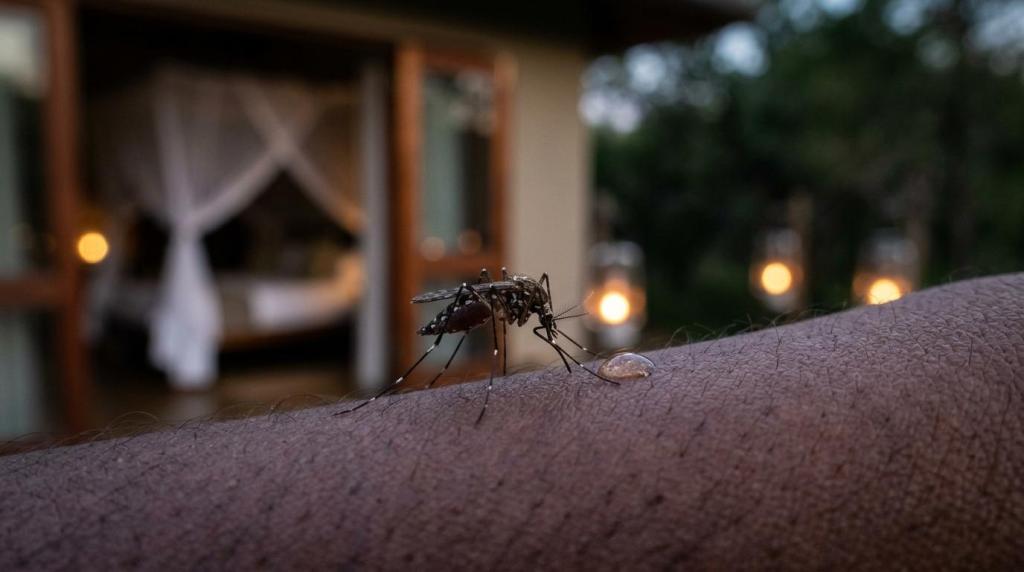
Yes, Hazyview should be treated as a malaria-risk area, not a malaria-free destination.
That does not mean every visitor will face a high chance of getting sick, and it does not mean you should cancel a safari or avoid the area. It means you should plan with the same care you would use for other parts of South Africa’s northeastern Lowveld, especially if your trip includes Kruger National Park, nearby private reserves, or travel during the wetter summer months.
The short answer on Hazyview malaria risk
South Africa’s health guidance places malaria transmission mainly in the northeastern, low-altitude parts of the country. Mpumalanga is one of the provinces repeatedly identified by national health authorities as malaria-endemic, alongside Limpopo and KwaZulu-Natal. Hazyview sits in Mpumalanga’s Lowveld and is closely tied to Kruger travel routes, so it falls into the practical category of places where malaria precautions matter.
For most travelers, the key takeaway is simple: if you are sleeping in Hazyview or using it as your base for Kruger, assume malaria prevention is part of your trip planning.
This is also why many travelers are told not to think of Hazyview in isolation. It is a gateway town for safari stays, often just minutes from Kruger access points like Phabeni Gate and Numbi Gate. When people ask whether Kruger is a malaria area, the answer is yes. Hazyview sits right in that wider travel zone.
After looking at South Africa’s official guidance and Hazyview’s location, the most sensible working assumption is:
- Mpumalanga malaria-endemic province
- Lowveld location
- Close to Kruger National Park
- Higher seasonal risk from September to May
- Not a malaria-free destination
Why Hazyview is treated as a malaria-risk area
The biggest reason is geography. Hazyview is in the Lowveld region of Mpumalanga, a lower-altitude, warmer part of the province. South African malaria guidance notes that transmission happens mainly in the northeastern part of the country, especially in low-altitude areas below 1,000 meters. Hazyview fits that regional pattern.
Climate matters too. The Lowveld has a subtropical character, with warmer conditions that can support the Anopheles mosquitoes that spread malaria. Risk is not fixed at the exact same level every month or every year, because rainfall, temperature, and human movement all affect transmission. Still, the official pattern remains consistent enough that travelers should prepare rather than guess.
Hazyview’s role as a safari base makes the answer even clearer. Visitors staying there are usually not spending all their time in town. They are driving in and out of Kruger, leaving early for game drives, returning around dusk, and sleeping in the same broader malaria-risk environment.
Here is a practical view of why Hazyview is usually grouped into malaria-aware travel planning:
| Factor | Why it matters |
|---|---|
| Mpumalanga province | National health authorities identify Mpumalanga as malaria-endemic |
| Lowveld setting | Lower altitude and warmer conditions fit South Africa’s malaria risk pattern |
| Kruger proximity | Hazyview is a main base for Kruger visits, so travel exposure overlaps |
| Seasonal summer rains | Risk rises in the wetter months, especially from September to May |
| Shifting local conditions | Rainfall and temperature can change mosquito activity year to year |
When malaria risk is higher in Hazyview
South Africa’s national malaria guidance says transmission is seasonal, with higher risk during the wet summer months from September to May. That does not mean the rest of the year is risk-free. It means those months deserve extra attention.
If your trip falls between late spring and early autumn, speak to a travel doctor well before departure. This is especially wise if you are staying several nights, visiting multiple safari areas, or combining Hazyview with other malaria-risk destinations in Southern or East Africa.
Rainfall can change the picture quickly.
A year with heavier rains can increase mosquito breeding conditions. A dry spell can lower activity. Since risk is not static, relying on old internet posts or casual advice from other travelers is not the best move. Current medical advice is more useful than a forum thread from five years ago.
What to ask your doctor before visiting Hazyview
A travel clinic or doctor should be your first stop, especially if you are visiting from North America, Europe, the UK, Australia, the Middle East, or Asia, where malaria may not be part of routine daily life. Medical professionals can tell you whether antimalarial medication is recommended for your dates, age, health profile, and itinerary.
This matters even more for young children, older travelers, pregnant travelers, and anyone with chronic health conditions or immune-related concerns. The right prevention plan is not identical for everyone.
A useful pre-trip discussion usually covers the following:
- Trip timing: Are you traveling during the higher-risk months from September to May?
- Medication choice: Which chemoprophylaxis option fits your health history and travel length?
- Family needs: Are there different recommendations for children or pregnancy?
- Side effects: What should you expect, and when should you start the medication?
- Backup plan: What symptoms after travel should trigger urgent medical care?
Some travelers hope insect repellent alone will be enough. Sometimes a doctor may feel that mosquito avoidance plus awareness is suitable, depending on the itinerary and current conditions. In many cases, though, prophylaxis is part of the advice for this region. That decision belongs with a qualified clinician, not guesswork.
Practical malaria prevention in Hazyview and the Kruger area
Even if you take preventive medication, bite avoidance still matters. Antimalarial tablets reduce risk, but they do not replace basic mosquito protection. Since mosquitoes that spread malaria often bite from dusk to dawn, your evening and overnight routine matters most.
That is very relevant for safari travelers. Early morning departures, sunset drives, dinners outdoors, and lodge relaxation time all increase the chances of mosquito exposure if you are not prepared.
Good habits are simple and effective:
- Use DEET or another effective repellent
- Wear long sleeves and long pants at night
- Sleep in screened or air-conditioned rooms when possible
- Keep doors closed after dark
- Use bed nets where provided
- Avoid sitting outside uncovered at dusk for long periods
Hazyview has plenty of comfortable accommodations, and many properties are used to hosting international guests with malaria questions. Still, “comfortable” does not mean “malaria-free.” A nice lodge room, a polished safari camp, or a family guesthouse does not remove the need for prevention.
Nighttime malaria precautions in safari accommodations
If you are staying near Hazyview before or after Kruger game drives, pay attention to the small details. Check window screens. Ask whether the room has air-conditioning or fans. Use the bed net properly if one is provided. Apply repellent before dinner, not only before bed.
These are minor steps, but together they lower the chance of bites.
Common myths about Hazyview and malaria
A lot of confusion comes from how people talk about safari destinations. One traveler says, “I went and had no issue,” while another says, “My lodge never mentioned malaria.” Those comments may be honest, but they are not medical guidance.
A few common myths keep coming up:
- “It’s only Kruger, not Hazyview”: Hazyview is part of the same broader Lowveld travel context and should be treated with care.
- “Winter means zero risk”: Cooler, drier months may reduce risk, but they do not turn the area into a certified malaria-free zone.
- “Luxury lodges remove the problem”: Better rooms can lower mosquito exposure, but they do not erase regional malaria risk.
- “If locals seem relaxed, tourists do not need precautions”: Local experience, immunity patterns, and travel behavior are not the same as short-term visitor risk.
Another myth is that malaria is rare enough to ignore. South Africa is working toward malaria elimination, which is good news, yet health authorities still issue alerts and prevention guidance for endemic provinces. Recent government statements have continued to list Mpumalanga among those provinces, and national figures have shown that malaria remains a real public health issue.
Symptoms to watch for after a Hazyview trip
Malaria symptoms can look a lot like other illnesses at first. Early signs may include fever, chills, sweats, fatigue, nausea, muscle pain, and feeling generally unwell.
As bFan’s health guide on infection-related night sweats points out, persistent sweating—especially alongside fever—can indicate an infectious cause rather than simple overheating, which is why recent travel should be flagged to clinicians.
Because those symptoms are not unique, travelers sometimes dismiss them as flu, food-related illness, or exhaustion from a long flight.
Do not wait around if you feel sick after visiting Hazyview or Kruger.
Tell a doctor immediately that you were in a malaria-risk area in South Africa. That part matters. Quick diagnosis and treatment can make a major difference, and delays can be dangerous.
Symptoms can appear during your trip or after you return home, so your malaria awareness should not stop when the safari ends.
What this means for planning a Hazyview safari
The good news is that many people visit Hazyview every year and have a safe, memorable time. Malaria awareness is part of smart planning, not a reason to panic. A well-prepared traveler can reduce risk a lot with the right medication advice, bite prevention, and symptom awareness.
If Hazyview is your base, think of malaria planning the same way you think about packing a passport, booking transfers, or choosing the right safari clothing. It is a standard part of going to South Africa’s Lowveld.
That approach is usually the most realistic one: treat Hazyview as a malaria-risk area, ask for current medical advice before you go, and enjoy the region with the right precautions in place.