Choosing between a self-drive trip and a guided safari in Kruger National Park is not really about which one is “right.” It is about what kind of safari day you want to have once the gate opens, the light turns gold, and everyone on the road starts scanning for movement in the bush.
Both options can be excellent. Kruger National Park is one of the few major safari destinations where independent travelers can drive themselves, and many do. At the same time, guided game drives remain popular because they remove a lot of the pressure from the day and can give guests access to times and routes that are not available to regular visitors.
How a Kruger self-drive safari works
A Kruger self-drive safari is exactly what it sounds like: you enter the park in your own vehicle or a rental car and follow the park roads at your own pace. That freedom is the main appeal. You can stop when you want, linger at a waterhole, skip a crowded sighting, or spend two hours following a quiet loop road just because it feels promising.
For many travelers, this style creates a strong sense of independence. You are making the calls. If you want to be first at the gate in the morning, you can do that. If you want a coffee stop at camp before heading out again, that is your choice too.
Kruger does place clear limits on that freedom. SANParks rules are strict about speed, gate times, and where visitors may drive. The speed limit is 50 km/h on tar roads and 40 km/h on gravel roads. Off-road driving is not allowed, and roads marked with a no-entry sign are off limits. Visitors also need to be back within official gate times, or they may face penalties.
One more detail surprises some first-time visitors: you cannot simply self-drive an open safari vehicle unless it has the proper permit and a covered canopy. In practice, most self-drive visitors use a standard closed vehicle, which changes visibility and comfort compared with a guided open-vehicle safari.
How a guided Kruger safari works
A guided Kruger safari puts the driving, route planning, and animal spotting in the hands of a trained guide. That sounds simple, but it changes the entire rhythm of the day. Instead of watching your speed, checking your map, and thinking about gate closing times, you are free to look, listen, and ask questions.
Guided drives also come with time-based advantages. SANParks notes that morning drives leave half an hour before official gate opening times. That means guided guests can be on the road while most self-drive visitors are still waiting to enter. Sunset drives continue into the evening and typically include a spot-lit return, which opens the door to nocturnal wildlife that day visitors rarely see from a private car.
Some guided options go even further. All-day guided drives may, on request, reach sections of the park that are usually inaccessible to tourists. That access difference matters more than many first-time visitors expect.
Many organized Kruger day safaris also use an open vehicle with a professional guide. That setup tends to improve visibility, photography angles, and the overall feeling of being “in” the environment rather than simply driving through it.
| Factor | Self-drive safari | Guided safari |
|---|---|---|
| Daily pace | Set by you | Set by the guide and safari schedule |
| Wildlife spotting | Depends on your patience and luck | Improved by guide experience and interpretation |
| Start times | Limited by gate opening | Morning drives can leave before gate opening |
| Evening wildlife | Must exit by gate closing | Sunset and night drives are possible |
| Vehicle style | Usually a closed car or SUV | Often an open vehicle |
| Rules to manage | You handle them yourself | Guide manages most of them |
| Cost structure | Lower direct cost, more DIY planning | Higher upfront cost, more included |
Kruger wildlife viewing: self-drive freedom vs guide expertise
If the only question is “Which option gives me the best chance of seeing more wildlife?” guided safaris usually have the edge.
That does not mean self-drive sightings are poor. Far from it. Kruger has excellent road networks, good game density in many areas, and a format that rewards patient drivers. Plenty of travelers have fantastic independent game-viewing days with lion, elephant, rhino, giraffe, and big herds of antelope.
Still, a guide brings two advantages that are hard to match on your own: field knowledge and pattern recognition. Guides know how to read alarm calls, fresh tracks, scavenger behavior, and small changes in traffic flow at sightings. They also know where animals tend to rest after sunrise, which loops hold water late in the dry season, and when a quiet area may be better than a famous road.
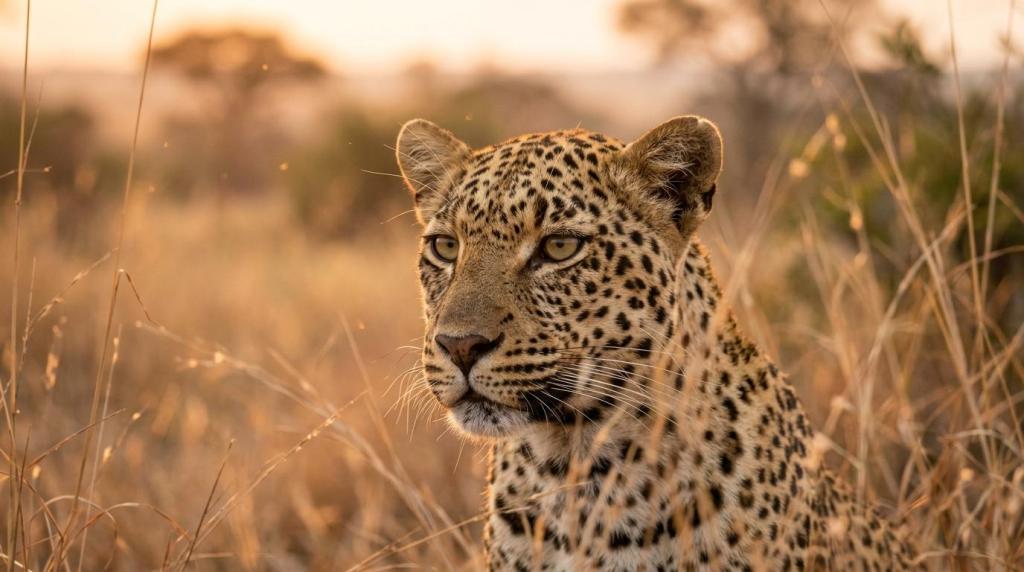
Guided drives also add interpretation. Spotting a leopard is exciting. Learning why it chose that drainage line, how the birds nearby are reacting, and what time it may start moving again makes the sighting richer.
Wildlife success in Kruger often comes down to a few practical factors:
- Time on the road
- Access to dawn and dusk
- Vehicle visibility
- Guide experience
- Patience at sightings
- Seasonal conditions
Self-drive works especially well for travelers who enjoy the hunt and do not mind long quiet stretches between memorable moments. Guided safaris suit people who want less guesswork and more context around what they are seeing.
Kruger safety and park rules that change the experience
Safety is one of the biggest differences between these two styles, even though both take place inside the same park.
In a self-drive setup, you are responsible for everything from route timing to road awareness. That includes watching for animals on the road, keeping a safe distance at sightings, managing restroom and fuel planning, and making sure you are not caught far from camp near gate closing time. None of that is difficult for a prepared traveler, but it does take attention all day long.
In a guided vehicle, much of that pressure drops away. A qualified guide knows the road rules, animal behavior, sighting etiquette, and timing windows. Guests can focus more fully on the experience while the guide handles positioning, scanning, and safe driving.
For self-drive visitors, the day usually runs best when these basics are taken seriously:
- Speed control: Kruger’s limits are 50 km/h on tar and 40 km/h on gravel, and they matter for both safety and wildlife spotting.
- Gate timing: Official opening and closing times are strict, so route planning is part of the safari.
- Road access: No off-road driving and no using roads marked no-entry.
- Vehicle choice: Most visitors use a standard closed vehicle, not an open safari vehicle.
- Driver focus: Animal viewing is exciting, but the driver still needs to drive.
Families with young children, travelers nervous about road conditions, and first-time safari guests often feel more relaxed with a guide for this reason alone.
Kruger safari value: entry fees, vehicle costs, and what you are paying for
Price matters, but “value” in Kruger is broader than the daily rate.
A self-drive day usually looks cheaper at first because you are paying your own way into the park and using your own car or rental vehicle. The basic entry side is straightforward: SANParks charges a conservation fee, and current listed rates for 1 November 2025 to 31 October 2026 include R140 for South African adults, R70 for South African children, R296 for SADC adults, R147 for SADC children, R692 for standard adult visitors, and R345 for standard children. Those fees can change by period, so it is smart to check current SANParks pricing before travel.
A guided safari layers more into the price. You are not only paying for park access. You are also paying for the guide’s skill, the safari vehicle, the timing advantage, and someone else handling the logistics. In many cases, that bundled setup feels well worth it, especially on a short trip where every game drive matters.
Self-drive also comes with indirect costs that people often forget to calculate. Those may include rental days, fuel, parking, tolls, navigation stress, and the lost opportunity of missing key wildlife periods because you needed to manage breakfast, gate lines, or a long transfer.
When comparing value, it helps to look at what each style includes in real terms:
- Conservation fee
- Vehicle costs
- Fuel
- Guide expertise
- Access to sunrise or sunset drives
- Open-vehicle experience
- Reduced planning pressure
A lower price does not always equal better value, especially if you only have one or two safari days.
Which travelers usually prefer self-drive or guided safaris in Kruger
Travel style matters just as much as budget.
Self-drive tends to appeal to travelers who like independence, enjoy maps and route planning, and are happy to trade a bit of comfort for flexibility. It can be a great fit for repeat safari guests, birders who want to stop often, and visitors building a broader South Africa road trip.
Guided safaris often fit first-time visitors, honeymooners, photographers who want a better line of sight, families who want less stress, and travelers with limited time. If you are flying in for a short Kruger stay, a professional guide can make those few hours count.
A simple way to choose is to think about your personality on vacation:
- Choose self-drive if: you enjoy being in control, are comfortable with park rules, and do not mind doing the work behind the experience.
- Choose guided if: you want easier wildlife finding, expert commentary, and less mental load during the day.
- Choose a mix if: you want freedom on some days but still want sunrise, sunset, or night-drive access with a guide.
That mixed approach is often the sweet spot.
A practical way to combine self-drive and guided game drives in Kruger
Many travelers do not need to treat this as an either-or decision. Kruger works very well as a combination safari.
You might self-drive during the middle of the day, when wildlife can be quieter and the roads are easier to manage, then book a guided morning or sunset drive to access the hours when predators are more active and the light is better. That way, you keep the freedom of independent travel while adding the guide advantage where it counts most.
This approach also helps different travelers in the same group. One person gets the fun of self-driving, another gets the comfort of structured game viewing, and everyone gets a broader feel for the park.
If your trip is short, guided drives usually make the strongest first impression. If your trip is longer, self-drive adds flexibility and can be very rewarding. Kruger gives you room to choose the style that fits your pace, your budget, and the kind of safari story you want to come home with.