
The first safari packing win is not buying a whole new wardrobe. A safari is mostly about smart layers, sun and insect protection, and keeping your bag light enough for the travel style you booked. Whether you are heading out on a 2-day Kruger safari from Johannesburg or a longer expedition, the goal remains the same: pack for what you will actually do.
Pack for what you will actually do: early-morning game drives, a warm hour at sunrise, a hot midday, dust on the roads, and a relaxed dinner back at camp or lodge. When in doubt, choose simple, neutral, re-wearable pieces that dry quickly.
Start with the big question: lodge road transfer or light aircraft?
Your packing list changes the moment small planes enter the plan. Many fly-in routes across Southern and East Africa use compact aircraft with strict baggage rules and small cargo holds. That is why safari operators often ask guests to use soft-sided duffels rather than hard suitcases.
Africa Moja Tours & Safaris typically plans itineraries around these realities: reliable transfers, realistic luggage limits, and the kind of bag that fits the vehicle or aircraft without drama. This is especially true for a short Kruger safari getaway, where efficiency is key. A good starting target is a soft bag that compresses, plus a daypack for the vehicle.
A good starting target for many fly-in safaris is a soft bag that compresses, plus a daypack for the vehicle.
What to wear on safari: keep it quiet, neutral, and layered
Safari clothing is practical clothing. You want comfort in heat, warmth in the open vehicle at dawn, and coverage against sun and insects. The easiest approach is a base layer, a warm layer, and a light outer layer that blocks wind or rain.
Neutral earth tones also help you blend in and stay comfortable in bright light. Bright colors can feel out of place in the bush, and in some regions dark blues and blacks may attract biting flies.
After you have the layering plan, build a small mix-and-match set. Aim to re-wear items, especially if your lodge offers laundry.
Here’s a simple “first-timer wardrobe” that works in most classic safari destinations:
- Base tops: 2 to 4 breathable T-shirts or long-sleeve sun shirts
- Long sleeves: 1 to 2 lightweight shirts for sun and mosquitoes
- Bottoms: 2 pairs long pants (convertible zip-offs are handy)
- Shorts for camp time
- Warmth: A fleece or sweater (essential for that weekend safari from Johannesburg during winter months).
- A light rain jacket or wind shell
Fabrics, fit, and the little details that matter
Choose lightweight, breathable, quick-drying fabrics. Cotton can be comfortable, but it may stay damp longer in humid conditions. Many travelers like modern moisture-wicking synthetics or blends that dry fast overnight.
Fit matters more than people expect. Tight clothes can feel sticky in heat and make insect bites more annoying. Slightly looser pieces allow airflow and make layering easier.
One sentence that saves a lot of discomfort: bring at least one truly warm layer for early drives.
Footwear and accessories: fewer items, better choices
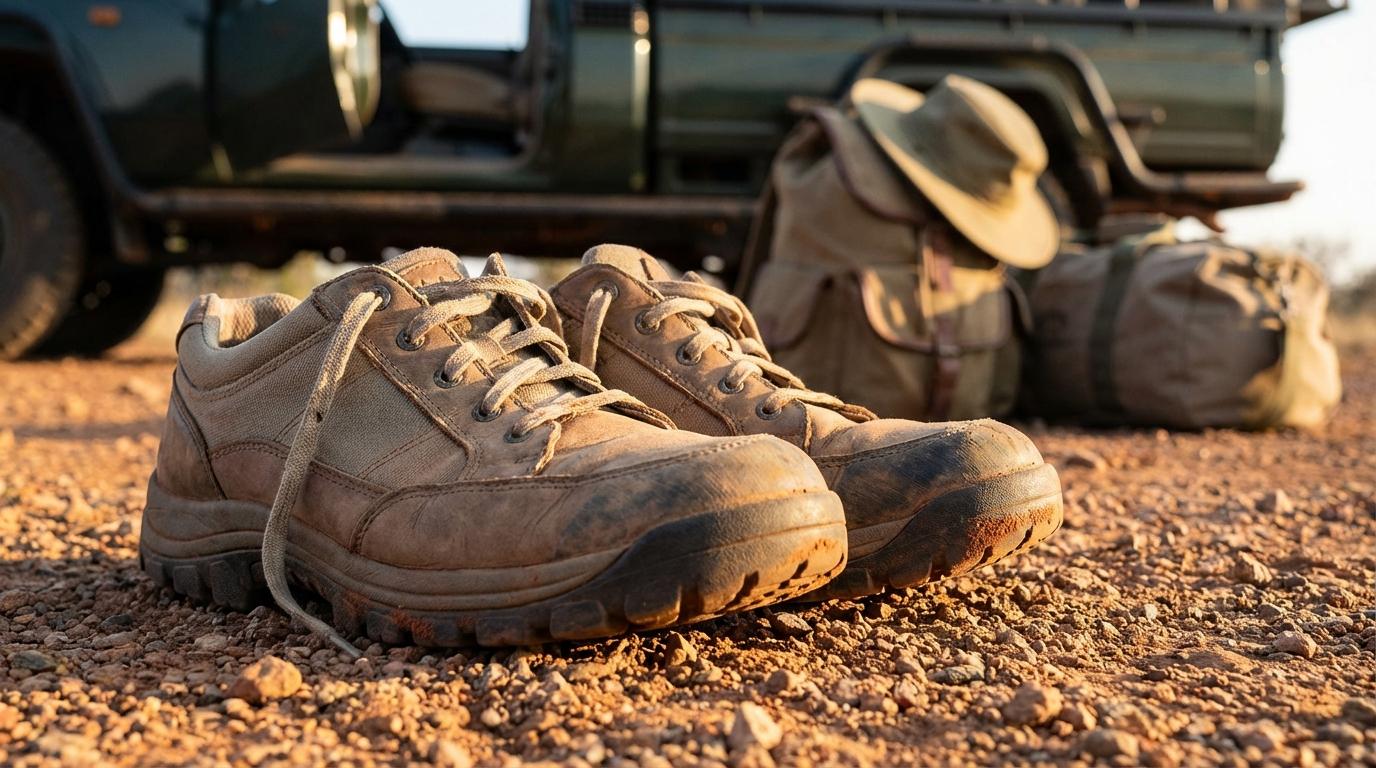
You do not need heavy boots for most vehicle-based safaris, but you do need shoes you have already broken in. Dust, gravel, and occasional mud are common, and blisters can ruin a walking activity.
Bring one main pair of closed-toe walking shoes or light hikers, then add something easy for camp.
Accessories do a lot of work on safari. If you pick them well, you can pack fewer clothing items and still stay comfortable.
A practical accessory set looks like this:
- Sun hat: wide brim, breathable, secure in wind
- Sunglasses: polarized with UVA and UVB protection
- Buff or scarf: dust, sun on the neck, warmth at dawn
- Socks: enough for cool mornings and long drives
- Camp sandals or flip-flops
Health and safety essentials (without overpacking)
Most safari health items fall into three groups: sun protection, insect protection, and simple first aid. The sun can be intense even on cooler days, and many safari areas have mosquitoes at dawn and dusk.
Plan to carry small amounts in your daypack so you actually use them during the drive, not just back in your room.
Before you pack medications, confirm your personal needs with a clinician and check entry requirements for the countries on your route.
A balanced kit usually includes the following:
- Insect repellent: DEET or picaridin; apply at dawn and dusk
- Clothing treatment: permethrin-treated items or spray-on treatment (follow label instructions)
- Sunscreen: SPF 30+ minimum, SPF 50 if you burn easily
- Lip balm: with SPF
- Basic first aid: plasters, antiseptic wipes, blister care, antihistamines, pain relief, anti-diarrheal medicine
- Any prescriptions in original packaging
Hydration matters as much as pills. A refillable water bottle is useful on game drives and transfers, and many camps offer filtered water for refills.
Tech, power, and wildlife viewing gear
Phones take great travel photos, but wildlife is often far away. If photography is a main goal, a camera with a telephoto lens makes a real difference. Binoculars can be even more valuable, because they help you see detail when animals are resting in shade or far across a plain.
Power is the other half of the story. Some camps have limited outlets in rooms, and long drives can drain batteries quickly.
Pack for dust, too. Fine powder gets everywhere in dry season, and it loves camera buttons.
A simple, reliable setup includes:
- Binoculars: 8×42 or 10×42
- Camera plan: camera body, telephoto lens, strap, lens cloth
- Spare storage: extra memory cards, not just one large card
- Power: power bank, charging cables, compact multi-port charger
- Adapter: correct plug type for your route (plug styles vary by country)
- Protection: dust bag or case, rain cover in wetter months
Documents, money, and small admin items that prevent stress
Safari packing is not only clothing. It is also the paperwork and small tools that keep travel smooth across borders, airports, and park gates.
Keep your essentials in your carry-on, and have digital backups in a secure place.
Many travelers find it helpful to prepare these items a week before departure:
- Passport and visas: confirm validity and entry rules for every country on the itinerary
- Travel insurance: include medical coverage and evacuation where relevant
- Vaccination proof: carry certificates if required for your routing
- Cards and cash: a mix is useful for tips and small purchases
- Contacts: emergency numbers and your operator’s after-hours support line
Luggage strategy: soft bags, simple organization, and realistic weights
A soft-sided duffel is the standard for many safaris, especially when light aircraft are involved. It compresses into small spaces, fits better in safari vehicles, and is easier to handle on rough ground.
Try packing cubes or simple organizers, but keep it minimal. Over-organizing can add bulk and weight.
Laundry can change everything. Many lodges and camps offer same-day or next-day laundry, which means you can pack fewer clothes and repeat your favorite pieces. It also means quick-dry fabrics earn their place.
One more detail to check: some destinations restrict single-use plastic bags. Reusable pouches for toiletries are a safe choice, and they make packing cleaner.
A practical packing list table (quantities that fit most first trips)
Use this as a starting point, then adjust based on season, trip length, and whether laundry is available.
| Category | What to pack | Suggested quantity |
|---|---|---|
| Tops | Breathable tees, long-sleeve sun shirts | 3 to 6 |
| Layers | Fleece or sweater, light rain or wind shell | 2 |
| Bottoms | Long pants (1 convertible if you like), optional shorts | 2 to 3 |
| Footwear | Walking shoes, camp sandals | 2 pairs |
| Accessories | Hat, sunglasses, buff, socks | 1 each (socks 4 to 7) |
| Health | Sunscreen, lip SPF, repellent, personal meds | Travel sizes plus refills |
| Gear | Binoculars, camera gear, lens cloth | 1 set |
| Power | Adapter, power bank, multi-port charger | 1 each |
| Day bag | Small daypack for drives | 1 |
Packing for specific safari styles
Some itineraries combine very different climates in one trip. A Kenya or Tanzania safari may include cooler high-altitude areas, while Southern Africa can bring crisp evenings in winter months. Add-ons like Victoria Falls, Zanzibar, Cape Town, or a gorilla trek also shift what “essential” means.
If your route includes a mix, pack for the coldest mornings and the wettest afternoons, then keep everything else simple.
Here are common adjustments that first-timers appreciate:
- Green season (rainy months): pack a lightweight rain jacket, dry bags for electronics, and a spare set of socks
- High-altitude stops: add a warmer fleece and consider thin gloves for early drives
- Beach extension: swimsuit, sandals, and one nicer evening outfit
- Walking safaris or forest hikes: long pants, long sleeves, and sturdy closed-toe shoes
What not to bring (and why it helps)
Overpacking is the most common first-timer mistake, and it usually shows up as extra shoes, too many outfits, and heavy “just in case” items. Safaris are repetitive in a good way: similar early starts, similar drive conditions, similar clothing needs.
Avoid strong fragrances. Many camps prefer neutral scents, and heavy perfume can bother other guests in shared vehicles.
If you want a quick “leave it behind” filter, use this:
- Extra jeans and bulky hoodies
- Hard-shell suitcases on fly-in routes
- Expensive jewelry
- Strong perfume or highly scented sprays
- More than two pairs of shoes
The night-before checklist that keeps you relaxed at the airport
Lay out what you will wear on travel day, then put the rest away. If you are tight on weight, wear your bulkiest closed-toe shoes and your warm layer on the plane.
Charge everything, then pack chargers where you can reach them without opening your whole bag.
Finally, place your safari daypack by the door with the essentials: water bottle, sunscreen, binoculars, and that one warm layer you will be grateful for at sunrise. Whether it’s a month-long journey or a quick short Kruger safari getaway, being organized means you can focus on what matters: the wildlife.