
Choosing between Kruger, Serengeti, and Masai Mara
Choosing between Kruger vs Serengeti vs Masai Mara, including the rich landscapes of South Africa and Kenya, is less about which one is “better,” and more about what you want your days to feel like: a road-trip-style safari with lots of flexibility, or an East African plains safari where the horizon seems to go on forever and the drama can build by the hour.
All three deliver iconic wildlife through unique safari experiences. All three can be done in comfort or in high-end style. The right pick, including Kruger National Park in South Africa, comes down to scenery, season, cost, and how you prefer to travel.
- Kruger National Park = flexibility and value with classic bushveld variety
- Serengeti = vast plains, huge herds, wildlife migration scale and events
- Masai Mara = high-density action and famous river-crossing moments
The quick snapshot (if you only have 60 seconds)
Here’s a side-by-side view that helps many travelers decide fast on the best safari experience for them.
| Park | Country | Approx. size | Best-known for | Standout strengths | Typical trade-offs |
|---|---|---|---|---|---|
| Kruger National Park | South Africa | ~19,485 km² | Big Five variety in classic bushveld | Great species diversity (mammals and birds), strong infrastructure, excellent value options | Vegetation can be thicker, so some cat sightings take patience |
| Serengeti National Park | Tanzania | ~14,750 km² | The Great Migration across vast plains | Huge herds, major predator action, calving season, big skies | Often needs flights or long drives, tends to cost more once logistics are added |
| Masai Mara National Reserve | Kenya | ~1,510 km² | Migration river crossings and high predator density | Fast payoff on sightings, classic savannah photos, strong chance of big cats | Can feel crowded in peak months, higher entry fees, night drives limited to conservancies |
A single safari can be unforgettable in any of the three national parks, especially when witnessing the awe-inspiring wildlife migration. The question is which one fits your trip like a glove, and choosing the best tour operator in Africa can enhance the experience.
Landscapes: bushveld, endless plains, and “spotted” savannah
Kruger is a safari of rivers, woodlands, and shifting habitats. You might drive along a broad riverbed at sunrise, then cut through mopane woodland where elephants appear like gray boulders between the trees. That variety is a big reason Kruger supports such rich biodiversity. For those looking for a shorter adventure, consider a 2- day kruger safari from johanensburg to experience a condensed yet fulfilling journey through the park’s diverse ecosystems.
The Serengeti is the opposite mood: open space and long sightlines, renowned for its wildlife migration that spans the vast plains. The southern short-grass plains can feel minimalist and cinematic, and the kopjes (rock outcrops) become natural stages for lions scanning the grass, perfectly blending into the harmony of nature. When clouds build, the light changes quickly and photographers love it.
The Masai Mara is smaller, more concentrated, and instantly recognizable. Rolling grasslands, acacias dotted across the horizon, and thickets along seasonal rivers. Because the reserve is compact, wildlife action often feels closer together, and days can be packed with sightings without long transit drives—exactly why a Masai Mara safari is such a popular first pick in Kenya, especially given its role in conservation efforts.
- Kruger’s “patchwork” habitats = variety and birding strength
- Serengeti’s big skies = cinematic plains and long sightlines
- Masai Mara’s compact size = fast, high-density sightings
One-sentence reality check: if you dream of the classic savannah horizon, East Africa tends to match that mental picture more often than Kruger does.
Wildlife focus: Big Five, big cats, birds, and the Great Migration
You can see the Big Five in all three locations, but the way you encounter them differs.
Kruger in South Africa is a biodiversity heavyweight, and a 3-day Kruger safari from Cape Town or Johannesburg offers an ideal opportunity to explore its rich wildlife variety. The park is known for large elephant and buffalo numbers, excellent general game, and standout birding (SANParks lists over 500 bird species). Because the habitat can be thicker, cats can be more of a “find the sign, read the tracks, stay patient” experience, especially outside the most productive zones.
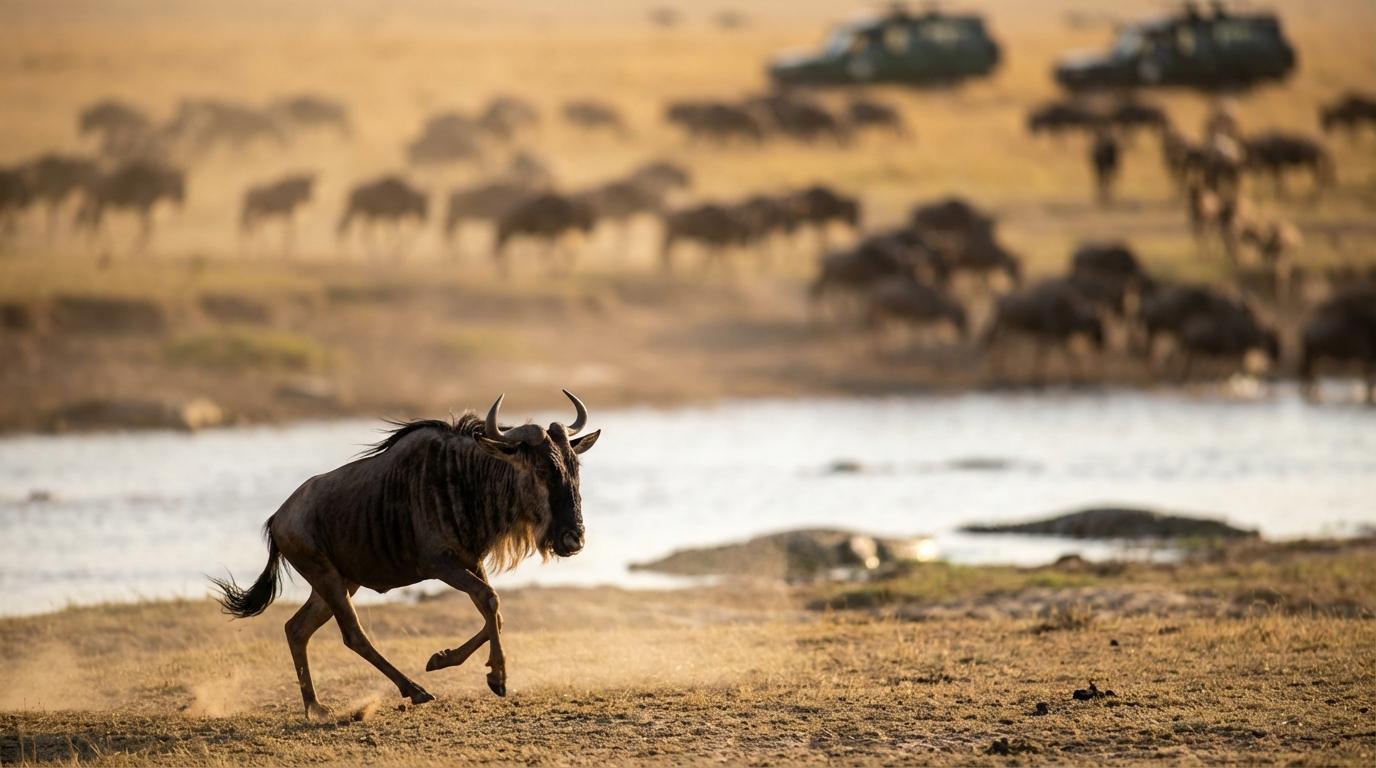
Serengeti wildlife can feel abundant in a way that’s hard to describe until you’ve watched a line of wildebeest stretch across the plain during a spectacular wildlife migration. The ecosystem supports massive herbivore populations and serious predator numbers. If you’re drawn to raw predator-prey interactions, the Serengeti is a strong contender.
Masai Mara is famous for density. On a good morning, you may see lions, cheetahs, elephants, and a hyena clan before brunch. When the Great Migration is in the Mara, a Masai Mara safari tour can deliver some of Africa’s most intense wildlife scenes, with crocodiles in the river and predators shadowing the herds.
- Serengeti is the “scale” king (especially for big herds and calving)
- Masai Mara is the “density” king (especially for big cats and crossings)
- Kruger is the “variety and value” king (especially for self-drive and birds)
The Migration itself is shared between Serengeti and Mara, featuring incredible wildlife migration events, but the “headline” moments vary by place and timing: calving season is a Serengeti specialty, while the most famous river crossings are often associated with the Mara River later in the year.
Best time to go: match the park to your calendar
Timing shapes everything: animal behavior, road conditions, pricing, even the feel of the air.
Kruger National Park in South Africa’s dry winter months (roughly May to September, with June to September a favorite) bring easier game viewing as vegetation thins and animals gather near water. Summer (about October to April) turns the landscape greener and can be excellent for birds, but it gets hot and humidity rises.
Serengeti planning often starts with the wildlife migration cycle. The herds are moving across different regions through the year, so “best time” depends on what you want to witness: calving, big herds on the move, or river crossings.
Masai Mara in Kenya is reliably good for wildlife most of the year, with the dry season (June to October) and January to February often offering strong visibility. The Migration is commonly in the Mara from roughly July to October, with peak crossing pressure often in August and September.
After you’ve picked a season, it helps to translate it into a simple decision filter:
- Dry-season visibility: Kruger (Jun to Sep), Serengeti (Jun to Oct), Mara (Jun to Oct)
- Births and baby animals: Serengeti calving (Dec to Mar), Kruger summer newborns (varies through the wet season)
- River-crossing roulette: Mara River (Jul to Oct), with crossings driven by rain patterns and herd movement
Safari style and rules: what you can do in each place
Safari isn’t one product. It’s a set of activities shaped by park rules, infrastructure, and surrounding concessions.
Kruger stands out for choice, including options like a 4-day Kruger safari from Johannesburg. You can do guided game drives, sleep in well-run rest camps, book guided bush walks, and join official night drives in certain areas. It’s also one of the easiest places to do a self-drive safari well, which changes the price and the rhythm of your days.
Serengeti and Masai Mara are often more lodge-and-camp focused, with guided game drives as the core. Both are famous for hot-air balloon safaris over the plains, a bucket-list morning for many travelers. Night drives are restricted: the Serengeti generally does not allow them inside the park, and in the Mara they’re usually only possible in private conservancies rather than the main reserve.
- Kruger = strongest self-drive and “mix-and-match” accommodation options
- Serengeti/Mara = strongest classic guided plains-safari rhythm
- Mara conservancies = best option for more flexibility (including certain night-drive possibilities)
If you like a schedule that stays simple, East Africa makes it easy: dawn safari drive, breakfast, relax, afternoon drive, dinner, sleep to the sounds outside the canvas.
Budget and logistics: the costs you actually feel
Two trips can look similar on paper and price out very differently once you add park fees, flights, and the style of accommodation.
Kruger can be excellent value because South Africa has a wide spread of lodging options, from self-catering chalets and campsites to private luxury lodges in the Greater Kruger area. Roads and access are also straightforward, so you can often reduce costs by driving rather than flying.
Serengeti and Masai Mara generally run higher for many travelers, even before you step into a camp, because international flights to East Africa can cost more from some regions and internal flights or long 4×4 transfers add up. Park fees also tend to be higher, especially in the Mara, where fee structures changed recently and can be steep in peak periods.
A few budget “pressure points” to plan around:
- Park fees: often lower in Kruger than in Serengeti and the Mara, which can meaningfully change a multi-day total
- Internal transport: charter flights into the Serengeti or the Mara save time, but they can be one of the biggest line items
- Accommodation style: Kruger offers more true budget beds inside the park; East Africa skews toward tented camps and lodges
Crowds and the feel of a sighting
Crowds are not just about how many people enter a park. They show up as “vehicle pressure” on popular safari sightings.
Kruger receives a large volume of visitors, but it is also huge, and the road network spreads people out. Some areas can get busy near gates and on famous loops, especially during school holidays, yet you can still find quiet pockets by choosing regions carefully and staying longer.
The Serengeti’s scale helps. Even in peak season, there are places where a big herd feels like it belongs to you and the wind. In the central areas around busy months, you may still share sightings, but dispersal is often easier than in the Mara.
The Masai Mara can feel most intense during peak Migration months. The reserve is small and the sightings are concentrated, so it’s common to see many vehicles arrive quickly when a crossing starts or when a cheetah begins a hunt. If you want a calmer version of the Mara experience, pairing the reserve with a nearby conservancy can change the tone dramatically.
- For fewer vehicles in East Africa, consider adding conservancy time around the Mara or exploring options in Kenya.
- For fewer vehicles in Kruger, choose regions carefully and avoid school-holiday peaks
Which one fits you? Real traveler profiles
Most decisions get easier when you picture the trip you want, not just the animals you want.
Here are a few “fit” patterns that tend to hold true:
- First safari with limited time: Masai Mara often delivers fast, high-density sightings, especially from Nairobi by road or flight
- Wildlife scale and classic plains drama: Serengeti shines when you want wide landscapes, huge herds, and long game drives that feel epic
- Value, flexibility, and variety: Kruger is hard to beat if you like choice in lodging, shorter drives from major cities, and excellent all-round wildlife
One-sentence nudge: if the Great Migration is the reason you’re booking a safari, you’re choosing between Serengeti and Mara, and you might want to consult the best tour operator in Africa for an unforgettable experience.
Smart combinations (without turning your trip into a marathon)
If you have 7 to 12 days, combinations can be more satisfying than trying to force a single park to meet every goal.
A common South Africa pairing is Kruger plus Cape Town, which gives you wildlife and a world-class food and scenery break in one country. It also keeps travel simpler for many first-time Africa visitors.
In East Africa, Serengeti plus Masai Mara is the classic Kenya and Tanzania safari pairing, though it involves a border crossing plan and careful timing. Many travelers instead do Serengeti with Ngorongoro Crater for variety, then finish with Zanzibar for beaches.
If you want to split regions, you can also do a 3-day Kruger safari from Johannesburg on one trip and save the Serengeti or Mara for a future “plains and Migration” trip. That approach keeps each safari focused.
- Kruger + Cape Town = easiest “one-country” win for variety
- Serengeti + Ngorongoro + Zanzibar = strong Tanzania flow
- Serengeti + Masai Mara = classic Kenya and Tanzania safari for Migration fans
Getting the itinerary right (and avoiding the usual missteps)
The biggest planning mistakes are often avoidable: choosing the right park but the wrong month, staying too far from the action, or trying to do too many overnights and spending your safari in transit.
Working with an on-the-ground operator in South Africa can help connect the dots between season, camp location, transfer times, and your preferred pace. For the most seamless experience, consider partnering with the best tour operator in south africa who understands local logistics and can tailor itineraries—from a 2- day kruger safari from johanensburg to extended journeys—in a way that suits your interests and schedule.
Before you lock anything in, it helps to answer a few practical questions in plain language: Do you care more about the Migration or the Big Five? Is your trip 3 nights or 10? Do you want to drive yourself or be fully guided? Are you traveling with kids who may need shorter game drives? Your honest answers usually point clearly to Kruger, Serengeti, Mara, or a combination that fits.
- If you want a 3-day masai mara safari, optimize for minimal transit (often flying Nairobi–Mara helps) and focus on prime wildlife areas
- If you prefer a 4-day masai mara safari, you can add conservancy time for a quieter feel and more flexible activities
- If you’re comparing a Masai Mara safari tour with the Serengeti, let your dates decide whether you prioritize calving (Serengeti) or crossings (Mara season dependent)

