Reading safari descriptions for the first time can feel a bit like stepping into a new language. You see phrases like game drive, sundowner, Big Five, and open vehicle, and suddenly a simple trip starts sounding more technical than expected.
The good news is that safari terminology is usually very practical. These words tell you how wildlife viewing works, when you will be out in the bush, what kind of place you will stay in, and what sort of experience the trip is built around. Once the basics are clear, reading an itinerary becomes much easier.
Why safari terminology matters for first-time travelers
A lot of safari language has been around for decades, and some of it comes from older travel traditions. The word safari itself has a long history and was once linked to expeditions, including hunting trips. Today, most travelers use it in a very different way: wildlife viewing, guided nature experiences, photography, and time in protected wilderness areas.
That shift matters because some classic safari terms still carry historical meaning, even though the modern experience is centered on conservation and respectful wildlife viewing. The best example is the Big Five, which many people assume means the five biggest animals in Africa. It does not.
If you are comparing trips from specialist operators, including tailor-made safari planners like Africa Moja Tours, these terms also help you read between the lines. A “Big Five safari” suggests a different focus from a “photographic safari” or a “fly-in safari.” A “morning game drive” creates a different rhythm from a full-day overland route.
In other words, safari vocabulary is not just decoration. It tells you what your days may actually look like.
Safari glossary table for first-time safari guests
Before getting into the details, here is a quick-reference guide to some of the words you will see most often.
| Term | Plain-English meaning | What it usually tells you |
|---|---|---|
| Safari | A wildlife-focused trip, usually in African conservation areas | The overall style of the vacation |
| Game drive | A guided wildlife viewing drive, often in an open safari vehicle | You will spend time looking for animals with a guide |
| Morning drive | An early wildlife drive, often around sunrise | Best for cool temperatures and active animals |
| Sunset drive | A late-afternoon drive that continues into dusk or early night | Good light, changing animal activity, scenic atmosphere |
| Sundowner | A stop for drinks and snacks during an afternoon drive, often at a viewpoint | A classic social safari moment before heading back |
| Big Five | Lion, leopard, elephant, rhinoceros, and Cape buffalo | A safari focused on famous, high-profile wildlife |
| Open vehicle | A safari vehicle designed for visibility, often with no side windows | Better viewing and photography than a standard car |
| Bush | A general safari word for wild natural areas | You are in unfenced or semi-wild safari country |
| Lodge | A permanent safari property with rooms or suites | Often more built-up and hotel-like |
| Camp | A safari accommodation, which may be rustic or very luxurious | Often smaller, more nature-focused, sometimes tented |
| Guide or ranger | The person leading your safari activities | Your main source of wildlife knowledge and safety guidance |
| Tracker | A specialist who helps locate animals by reading signs and movement | Common at some higher-end safari camps |
Game drive meaning and what happens on a game drive
A game drive is the classic safari activity most first-time travelers picture right away. It usually means a guided wildlife outing in a safari vehicle, often one built for visibility and comfort rather than speed. In many safari areas, these vehicles are open-sided or open-topped, which gives you a clearer view and a stronger sense of being in the landscape.
Game drives are often timed around animal activity and light. Early morning and late afternoon tend to be the most popular windows because temperatures are cooler and many animals are more active. Official park information in places like Kruger describes morning drives that can leave before regular gate opening times and last about three to three and a half hours. Sunset drives often last around three hours and return after sunset.
That timing shapes the whole day. A morning drive may start with coffee and a very early wake-up call. An afternoon drive often leads into golden light, cooler air, and a very different mood in the bush.
If you are new to safari planning, it helps to know that not every game drive is the same. A national park drive may follow public roads and set schedules. A private reserve drive may allow more flexibility, including off-road positioning where permitted by local rules. Some drives focus on the Big Five, while others are just as rewarding for birds, giraffes, zebra, wild dogs, or smaller details you might otherwise miss.
A few basics make the experience more comfortable:
- Hat and sunglasses
- Neutral-colored layers
- Camera or phone with extra battery
- Binoculars
- Water bottle
Sundowner meaning and when it happens on safari
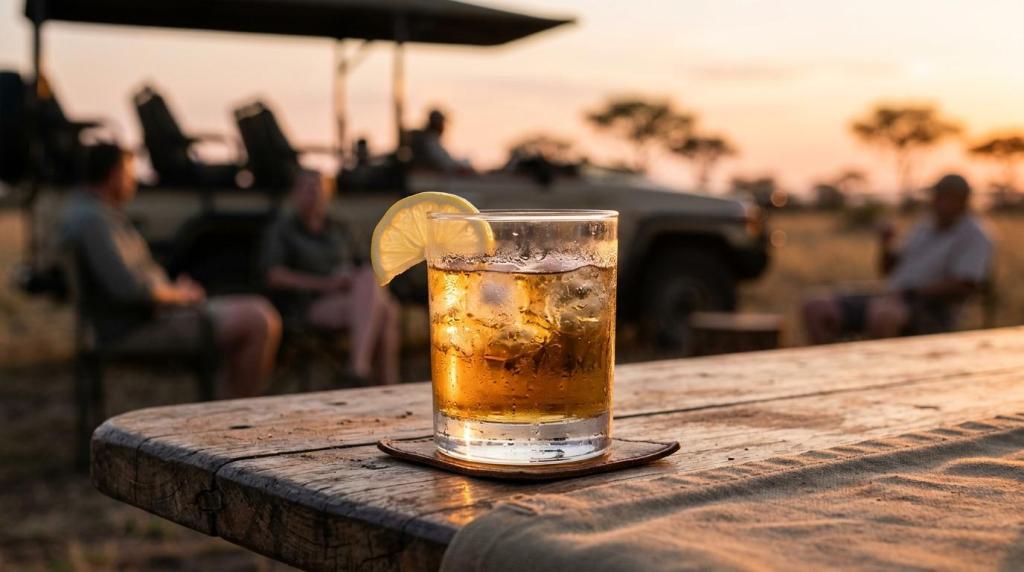
A sundowner is one of the most loved safari customs because it combines scenery, conversation, and that late-afternoon shift when the bush starts to cool down. On many afternoon drives, the vehicle stops at a scenic spot so guests can enjoy a drink and light snack before returning to camp or lodge.
It is simple, but memorable.
The setting is what makes it special. You may be parked near a viewpoint, an open plain, a dry riverbed, or a place where the sky turns orange and pink as the light drops. Sometimes it is quiet and reflective. Sometimes it becomes one of the most social moments of the day, with everyone talking about the sightings they have just had.
For first-time guests, the main thing to know is that a sundowner is usually part of the rhythm of an evening safari, not a separate excursion. If you see it in an itinerary, think of it as a pause built into the drive rather than a formal event with a dress code or set script.
Big Five meaning and why the term can confuse first-timers
The Big Five refers to five specific animals: lion, leopard, elephant, rhinoceros, and Cape buffalo. It does not mean the five biggest animals, the five rarest animals, or the five you are most likely to see on every safari.
That misunderstanding is very common.
The phrase comes from hunting history, where these animals were considered the most difficult and dangerous to hunt on foot. Today, the term is still widely used in safari planning, but it is used for wildlife viewing and trip descriptions rather than hunting. If a lodge or reserve highlights Big Five sightings, it usually means those animals are present in the area and are a major focus for many guests.
It is also worth keeping expectations realistic. Seeing four out of five can still be an excellent safari. Leopards are famous for being elusive, rhinos can be harder to find depending on location and conservation conditions, and some sightings depend heavily on season, habitat, luck, and time spent in the field.
Here is the core Big Five list in plain language:
- Lion: Often the animal first-timers hope to see most, especially on sunrise or sunset drives
- Leopard: The most elusive of the five in many areas, often spotted resting in trees or moving at dusk
- Elephant: The largest land animal on Earth and one of the most frequently seen safari highlights
- Rhinoceros: A deeply moving sighting for many travelers because of the conservation pressure these animals face
- Cape buffalo: Powerful herd animals that are part of the Big Five, even though first-timers sometimes overlook them
One more helpful note: a safari that is not marketed as “Big Five” is not automatically less exciting. Some areas are stronger for cheetah, wild dog, great migrations, birdlife, desert-adapted wildlife, gorilla trekking, or water-based safari experiences. The best trip depends on your interests, not just on the most famous label.
Common safari lodge and camp terms you may hear
Once you know the core wildlife terms, the next layer is accommodation and place-based vocabulary. This is where many travelers start to wonder what words like camp, lodge, tented camp, bush walk, or concession actually mean in practice.
A lodge usually suggests a permanent structure with hotel-style rooms, suites, dining spaces, and shared guest areas. A camp can mean many things. It might be rustic and simple, or it might be exceptionally luxurious with large tented suites, full bathrooms, and excellent service. In safari travel, “camp” does not automatically mean roughing it.
The word bush is also everywhere. It generally refers to wild natural surroundings rather than a manicured resort setting. When people talk about “being in the bush,” they usually mean being immersed in nature, away from city noise, with wildlife and landscape shaping the day.
You may also hear a few activity and location terms that help refine expectations:
- Bush walk: A guided walk focused on tracks, plants, birds, and smaller details that a vehicle can miss
- Hide: A sheltered viewing point near a waterhole or animal path
- Waterhole: A natural or managed place where animals come to drink
- Concession: A private or specially managed safari area where access may be more limited and controlled
- Transfer: The road or air connection that gets you from airport to lodge, or between safari stops
These words matter because they shape the pace of the trip. A fly-in safari with small camps feels very different from a road-based itinerary with larger lodges. Neither is automatically better. They just offer different styles of travel.
Safari booking language that changes your experience
Many safari terms are not just descriptive. They affect comfort, budget, and the kind of wildlife viewing you are likely to have. That is why it helps to read safari descriptions closely before you book.
A “shared game drive” means you may be in the vehicle with other guests. A “private vehicle” gives you more flexibility on timing and pace. A “scheduled safari” follows set departures and standard inclusions, while a “tailor-made safari” is built around your dates, interests, and budget. A “fly-in safari” usually reduces long road transfers but often comes at a higher price point.
If a safari itinerary uses several specialist terms and you are not sure what they mean, ask for the day-to-day rhythm in plain English. That usually clears things up quickly.
Useful questions include:
- Drive timing: Are game drives offered in the morning, afternoon, or both?
- Vehicle style: Will wildlife viewing be in an open safari vehicle or a standard closed vehicle?
- Big Five focus: Is this destination chosen mainly for Big Five sightings, or for a different wildlife specialty?
- Accommodation type: Is the camp rustic, classic, or luxury in style?
- Transfers: How much travel time is spent on the road versus in the reserve?
Reading safari itineraries with more confidence
Once you know a handful of core words, safari planning gets much less intimidating. You can tell whether a trip centers on classic game drives, quieter walking experiences, scenic evenings, or specific wildlife goals. You can also compare lodges and regions more fairly because the language starts to mean something concrete.
That is when the fun starts.
A well-written safari itinerary should feel clear rather than cryptic. If you see terms like game drive, sundowner, Big Five, open vehicle, camp, or bush walk, you now have a solid sense of what those words are pointing to and how they may shape the experience. And if a term still feels unclear, that is a good reason to ask questions before you book, not after you land.